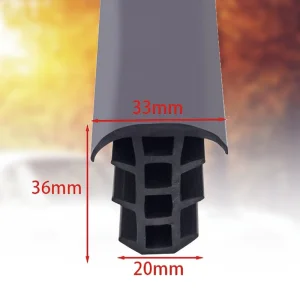
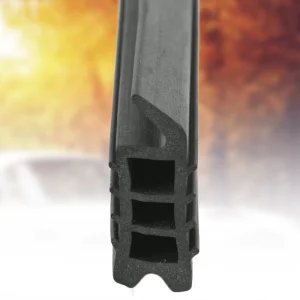
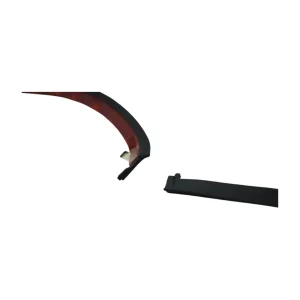
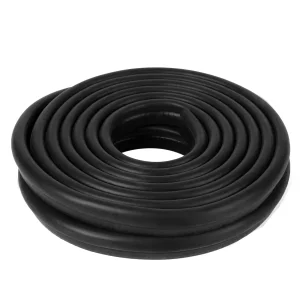
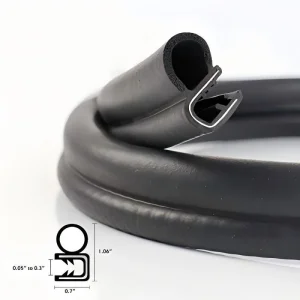
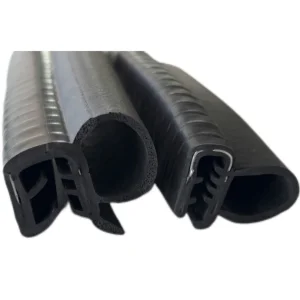
Engineered for high compression recovery, acoustic isolating properties, and harsh environment weathering resistance.
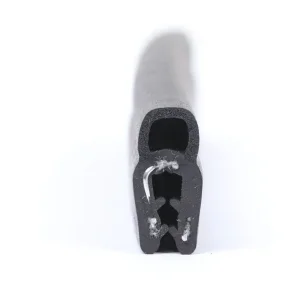
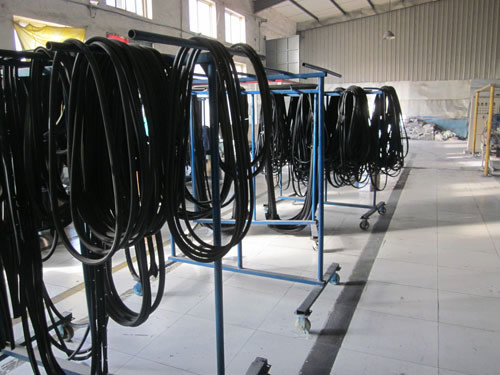
Zhejiang Haala Automotive Parts Co., Ltd. is a leading medium-sized enterprise specialized in high-performance vehicle sealing solutions. We integrate scientific research, design engineering, mold fabrication, precision extrusion, and global sales distribution. Located in the heart of China's automotive supply chain, our company offers end-to-end processing—from raw compound preparation and precision mold engineering to state-of-the-art product extrusion and finishing.
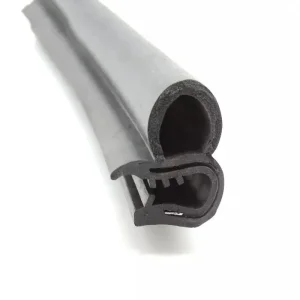
Our core capabilities center around advanced elastomer compounding and co-extrusion technology, combining solid and sponge rubber variants with steel wire carrier reinforcement. Supported by strict Quality Management Systems, we deliver customized sealing profiles engineered to reduce decibel intrusion, withstand structural compression, and resist extreme environmental degradation.
An Industry Study on NVH Attenuation, Elastomeric Material Compounding, and China’s Advanced Extrusion Capabilities.
Noise, Vibration, and Harshness (NVH) mitigation has become a primary metric defining driving comfort, vehicle reliability, and brand perception. With the exponential rise of Electric Vehicles (EVs) and Hybrid Electric Vehicles (HEVs), the classic masking effect of the Internal Combustion Engine (ICE) is gone. High-frequency motor hum, tire-to-road contact acoustics, and high-velocity wind friction are now heavily noticeable inside the cabin. To maintain a quiet passenger space, automotive design engineers rely on multi-tier sealing architectures.
Modern automotive noise barrier strips act as dynamic barriers designed to block, absorb, and damp noise transmission. High-density elastomeric profiles impede airborne sound waves, while internal hollow structures act as acoustic dampening chambers. Proper compression load deflection metrics ensure that door closure forces remain minimal while maintaining a hermetic seal against sound wave infiltration across the entire speed spectrum of the vehicle.
The choice of material compound dictates the longevity and reliability of a seal. At Zhejiang Haala, we leverage three primary elastomeric families, selecting and modifying compounds according to structural positions:
EPDM (Ethylene Propylene Diene Monomer): Known as the industry workhorse, EPDM exhibits superior resistance to ozone, UV radiation, and temperature swings (-45°C to +125°C). By adjusting the polymer molecular weight distribution and compounding with carbon black fillers, we achieve exceptional compression set properties, ensuring seals return to their original shape after thousands of door-closing cycles.
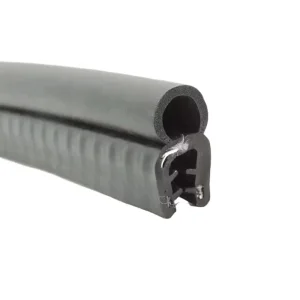
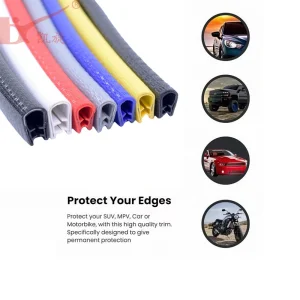
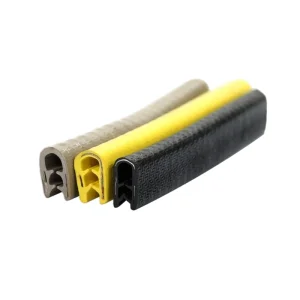
PVC (Polyvinyl Chloride): Modified PVC compounds offer cost-effective, easily colorable decorative trims with integrated internal steel grids. These are ideal for door edge protection and secondary non-critical sealing lines, providing resistance to mechanical impact and chemical exposure.
Silicone Rubbers: In critical areas exposed to extreme temperatures or high mechanical stress, medical/industrial-grade silicones provide unparalleled elastic recovery and thermal resistance, outperforming standard organic elastomers over extended lifespans.
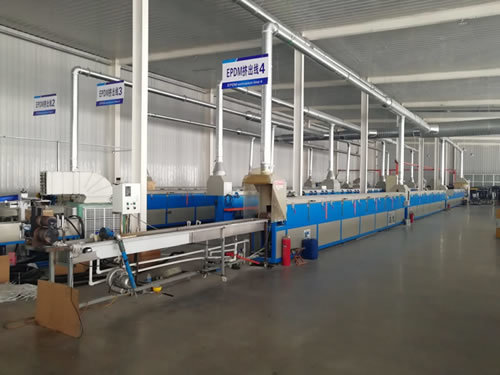
The manufacturing of a modern noise barrier seal profile demands precise raw material combination. Zhejiang Haala utilizes state-of-the-art continuous extrusion and microwave vulcanization lines. This allows us to manufacture complex multi-composite sealing strips that feature:
1. Dense Rubber Carrier: Provides mechanical structure and securely grips the sheet metal flange of the vehicle.
2. Internal Steel Wire/Stamping Carrier: Provides structure and keeps the seal firmly in place without adhesives.
3. Sponge EPDM Bulb: Highly compressible foam section that conforms to matching surfaces to block air, water, and sound.
4. Slip Coating/Flocking: Micro-polyester or polyamide flocking applied to contact points to lower friction, prevent window squeaks, and ease assembly.
Vertical manufacturing, state-of-the-art testing equipment, and global logistic networks.

We feature an in-house tooling center, continuous compounding machinery, and automated extrusion lines. We produce dense, sponge, and steel-reinforced multi-component composite profiles under one roof.

Equipped with computerized tensile testers, aging chambers, and compression set test jigs. We verify polymer properties, mechanical performance, and ozone exposure resistance to guarantee long-term field stability.

Proudly exporting to OEM and Tier-1 clients in Germany, USA, Japan, France, Brazil, Russia, and India. Our logistics department coordinates packing, documentation, and prompt shipping.
Our engineering scope reaches beyond passenger cars. The global transition to smart energy systems, electric drivetrains, and urban transit networks demands tailored sealing architectures:
Electric Vehicles: Electric vehicle door systems require low-friction glass run channels and door seals with minimal compression force deflection. This ensures door-closing mechanisms operate smoothly while conserving battery energy through optimized aerodynamics.
Heavy Industrial Machinery: Construction equipment cabs require seals that withstand constant vibration, grease exposure, and abrasive dust. Our steel-core reinforced EPDM profiles provide reliable mechanical isolation and sound dampening.
High-Speed Rail Transit: Rail passenger door seals must comply with strict fire, smoke, and toxicity regulations. We supply specialized flame-retardant silicone profiles that maintain flexibility and structural integrity under demanding dynamic loads.
An effective automotive noise barrier strip functions as part of a complete, localized vehicle seal system. Different parts of the vehicle frame require tailored profile shapes:
Windshield & Window Weatherstripping: Windshield profiles must prevent water ingress and wind whistle. Our three-mouth rubber configurations and insert metal carriers provide a tight, flush seal around glass panels.
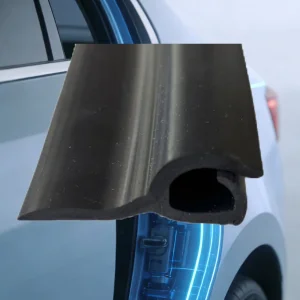
Primary Door Seals & Pillars: Utilizing complex co-extruded profiles that transition from a solid EPDM base for secure panel attachment to an ultra-soft sponge bulb. This ensures optimal compression and prevents whistling around door edges.
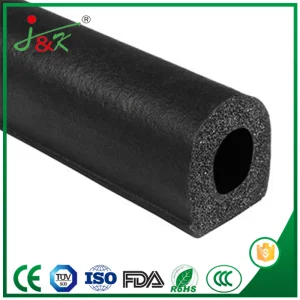
Engine Hood & Trunk Seals: These seals are exposed to high under-hood heat, engine fluids, and constant moisture. Our self-adhesive D-type weatherstrips ensure a reliable seal, protecting sensitive electronic compartments from environmental damage.
Technical guidance and sourcing information for global procurement managers and automotive engineers.
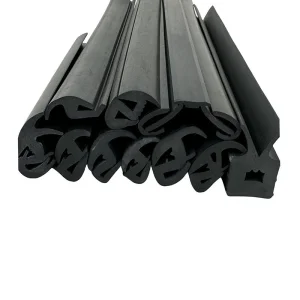
Additional engineering profiles designed for specific automotive assemblies and mechanical applications.
 Haala Parts