Highly durable, ozone-resistant rubber profiles optimized to withstand high saline coastal air and intense tropical solar irradiation across Maputo, Beira, and Nacala logistics lines.
An in-depth analysis of materials science, regional logistics corridors, and environmental resistance required for heavy-duty sealing strip performance in Sub-Saharan Africa.
Mozambique is experiencing rapid growth in its transportation and logistics infrastructure. Driven by major development corridors including the Maputo Corridor, Beira Corridor, and Nacala Corridor, the country serves as the critical maritime gateway for landlocked nations such as Zimbabwe, Zambia, and Malawi. As heavy-duty transport vehicles, intermodal freight containers, and utility vehicles operate continuously across these trade routes, they encounter intense thermal cycles and extreme environmental stresses.
The southern and coastal regions of Mozambique, specifically around Sofala, Zambezia, and Maputo, are marked by high ambient temperatures, relentless tropical UV radiation, and high-saline coastal air. Traditional PVC or low-grade rubber seals degrade rapidly under these conditions, leading to premature cracking, loss of elasticity, water leaks, and compromised acoustic properties. For heavy commercial vehicles and passenger buses, this degradation translates to elevated cabin noise, moisture ingress, structural steel corrosion around door frames, and ultimately, increased operational downtime.
To withstand the rigorous Mozambican climate, engineering specifications require Ethylene Propylene Diene Monomer (EPDM) formulation over conventional elastomers. EPDM is characterized by its saturated chemical backbone, which yields exceptional resistance to heat, ozone, and ultraviolet radiation. The main technological advantages include:
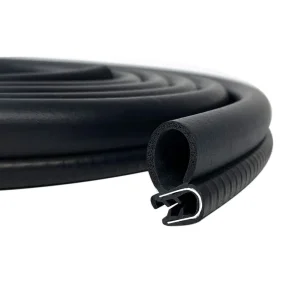
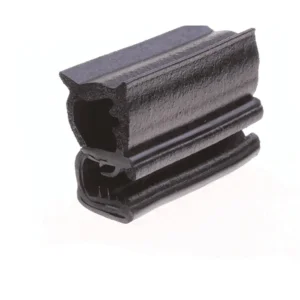
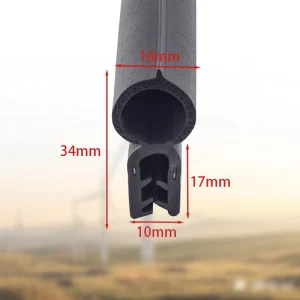
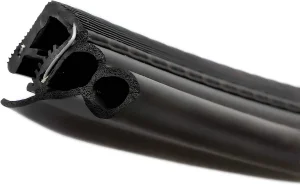
Modern commercial automotive door frames demand complex sealing profiles. Our manufacturing facility uses dual-durometer co-extrusion technology. This technique welds a dense rubber carrier section (usually Shore A 70 hardness) to a highly flexible, microcellular sponge bulb section (density around 0.5-0.6 g/cm³). The dense section is reinforced with steel wire or segmented steel clips, providing high retention forces to prevent the seal from detaching from the sheet metal flange during rough road travel common in regional Mozambican roads.
The microcellular sponge section provides the actual sealing barrier. Under low closing forces, it deforms to conform to irregularities in the door frame, keeping out dust, moisture, and fine sands (critical for operations in the dry provinces of Tete and Gaza). The outer surface is coated with a low-friction slip coating (silicone or polyurethane-based) to reduce door-closing effort and prevent freezing or sticking under humid conditions.
For industrial buyers, vehicle assembly operations, and spare parts distributors in Maputo or Beira, procurement efficiency is critical. Sourcing sealing components from our facility ensures seamless supply chain operations through optimized container packing, strategic ocean transit schedules via Singapore or Colombo directly to Maputo Port, and full compliance with import standards. With the implementation of the African Continental Free Trade Area (AfCFTA) and SADC regional standards, we supply fully certified components accompanied by comprehensive test documentation (including ISO 9001 and IATF 16949 compliant lab reports) to expedite customs clearance and reduce port detention costs.
Integrating scientific research, advanced raw material formulation, mold design, and high-precision extrusion to serve international markets.
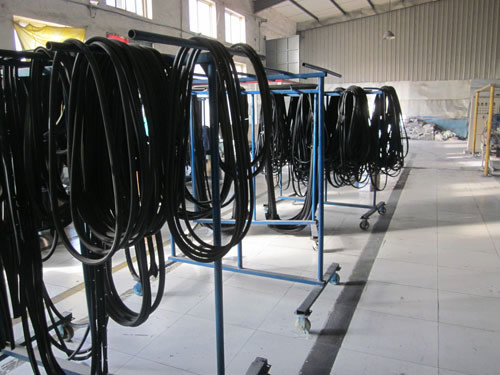
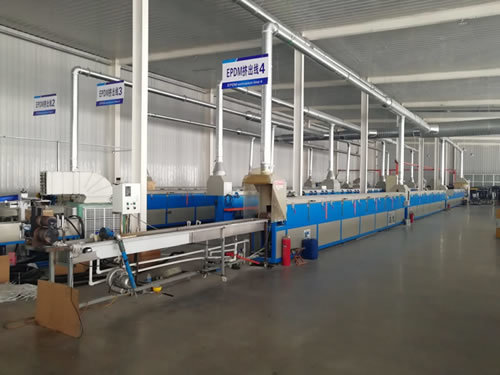
Zhejiang Haala Automotive Parts Co., Ltd. is a medium-sized private enterprise mainly engaged in the production of various types of vehicle sealing strips, integrating scientific research, development, production, and sales. Located in the Matun Industrial Zone, Qinghe County, our company leverages nearly ten years of professional experience to deliver top-tier elastomer technology globally.
Our strong technical capabilities and advanced management structure allow us to operate EPDM production lines, rubber molding lines, flat vulcanization systems, and advanced co-extruders. We utilize complete testing methods, creating a one-stop production model that covers raw material formulation, mold design/fabrication, and final product extrusion and curing.
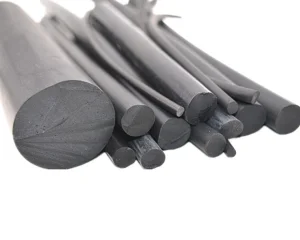
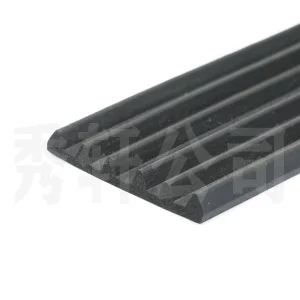
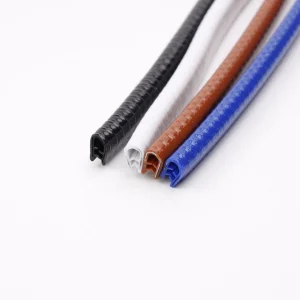
Our extensive product catalog covers: EPDM sponge (foam) sealing strips, dense sponge steel core three-composite profiles, soft-hard composite seals, building seals, modified PVC strips, glass curtain wall seals, refrigerated door gaskets, container rear door seals, self-adhesive weatherstrips, water-blocking profiles, and custom molded EPDM parts in various specifications and colors.

Professional extrusion of complex automotive sealing strips, EPDM foam gaskets, steel-core reinforced profiles, and dual-durometer rubber seals.

In-house testing laboratories checking tensile strength, compression deflection, ozone degradation, salt spray corrosion, and lifecycle endurance.

Our products are exported to Japan, Germany, the United States, France, Iran, Australia, Türkiye, India, Nigeria, Brazil, Russia, and Mozambique, earning high praise from clients.
How our engineering team configures elastomer compound properties to meet local environmental conditions.
Mozambique’s average UV index routinely reaches critical levels. To prevent polymer chain degradation, our compounding facility incorporates specialized carbon blacks, chemical anti-ozonants, and thermal stabilizers. This guarantees that our automotive rubber profiles maintain their tensile strength and elasticity even after years of continuous sunlight exposure.
Long-haul transport routes like the Maputo-to-Johannesburg corridor require high cabin comfort. By utilizing fine-cell microcellular sponge profiles with precise expansion rates, our sealing strips create an airtight barrier that isolates cabin interiors from exterior wind and road noise while preventing high ambient heat from overloading vehicle air conditioning systems, improving fuel efficiency.
Coastal moisture in ports like Beira and Nacala can cause low-quality internal steel clips to rust, expanding and splitting the surrounding rubber. We utilize premium-grade zinc-plated steel or high-tensile stainless steel wire cores, protected by dense EPDM coverage, preventing moisture contact and ensuring structural integrity.
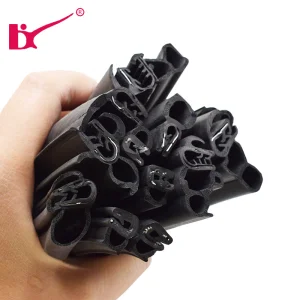
Select from our OEM-grade, steel-reinforced, and self-adhesive sealing profiles. Built to match international automotive standards.
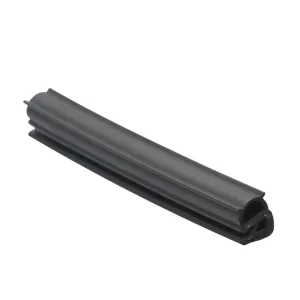
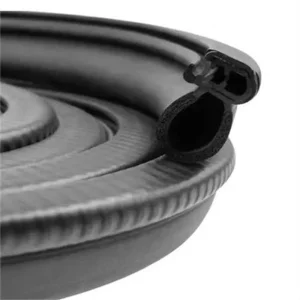
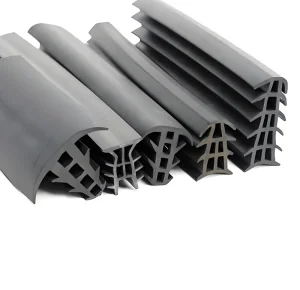
Additional Sealing Profiles Available for Large-Scale Procurement:
Addressing international shipping, custom tooling, material performance, and supply chain logistics for the Sub-Saharan region.
 Haala Parts