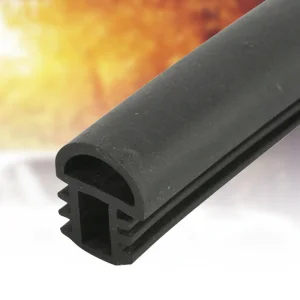
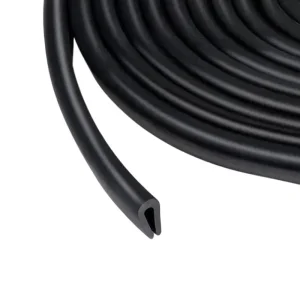
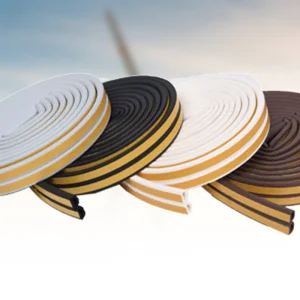
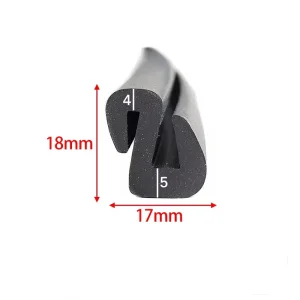
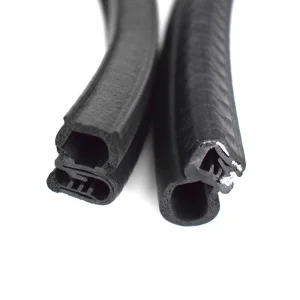
Engineered for NVH Reduction, Dynamic Tolerances, and Extreme Environmental Resistance
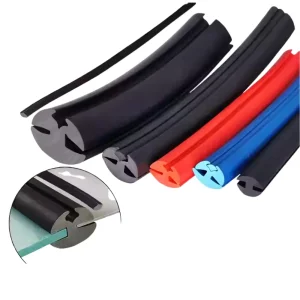
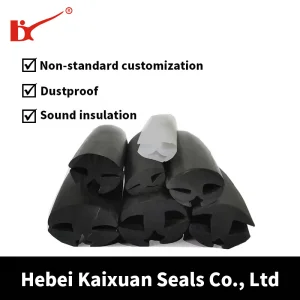
The modern automotive industry is undergoing a structural paradigm shift. With the rapid growth of New Energy Vehicles (NEVs) and autonomous driving architectures, the demands placed on automotive edge trim sealing systems have escalated beyond simple water and dust exclusion. Today, sealing solutions are critical components in optimizing vehicle aerodynamics, reducing high-frequency wind noise, protecting high-voltage battery enclosures, and maintaining structural integrity under dynamic stresses.
This whitepaper serves as an industry authority guide analyzing the top automotive edge trim sealing manufacturers and exporters globally, with a focus on core material capabilities, custom engineering solutions, and structural design configurations required by Tier-1 OEM suppliers. We dissect the mechanical properties of EPDM elastomer, TPV co-extrusions, silicone-based profile lines, and heavy-duty steel-core composite seals.
A Pioneer in Scientific Research, Custom Development, and High-Performance Extrusions
Zhejiang Haala Automotive Parts Co., Ltd. (formerly collaborating with regional industrial hubs in Qinghe County, including Hebei Ruiyuan Automotive Parts Co., Ltd.) is a highly specialized, medium-sized private enterprise dedicated to the design, research, development, and high-volume manufacture of state-of-the-art vehicle sealing strips. By integrating cutting-edge material science with advanced tooling technologies, we supply highly engineered sealing profiles to domestic and international automotive assembly chains.
Strategically situated in the Matun Industrial Zone, Qinghe County, our facilities harness nearly a decade of technical refinement. Our engineering portfolio spans critical sealing materials including dense rubber, sponge rubber, silicone, modified PVC, and composite systems with integrated metallic or wire-mesh skeletons. Our systems meet the highest performance indexes for compression set, tensile elasticity, environmental aging, and ozone resistance.
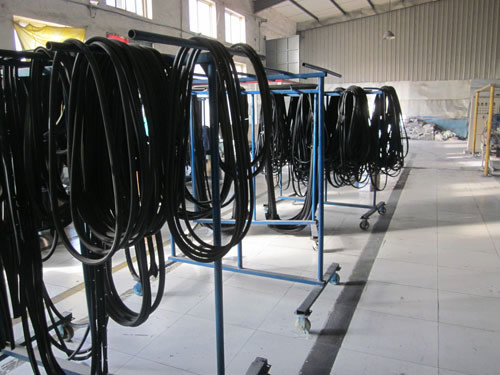
Global procurement teams at Tier-1 automotive firms operate under stringent operational standards. Choosing the right edge trim sealing exporter requires evaluating manufacturers across four critical pillars:
Exporters must ensure compliance with international chemical frameworks such as REACH and RoHS. Material formulations must be free of harmful plasticizers, heavy metals, and polycyclic aromatic hydrocarbons (PAHs). For EV applications, flame-retardancy (UL94 V-0 standards) and low outgassing properties are non-negotiable criteria.
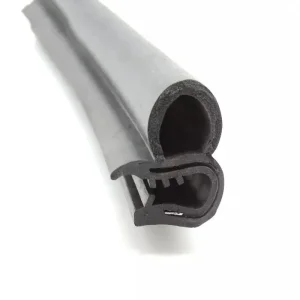
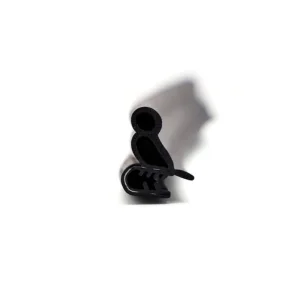
Automotive bodies exhibit complex curves and variations in panel gaps. Edge seals must incorporate dynamic geometries, featuring multi-port configurations and variable durometers (combining dense EPDM for structural clamping with sponge EPDM for compressible sealing). Metal carriers must be completely embedded to prevent electrochemical corrosion between the steel carrier and the aluminum vehicle frame.
High-quality glass run channels and door seals require flocking or low-friction slip coatings (such as polyurethane-based coatings). These minimize sliding resistance, eliminate squeak-and-rattle (S&R) noise, and prevent ice bonding to the rubber profile during sub-zero operations.
Underpinning Every Extrusion and Molded Part with Engineering Rigor
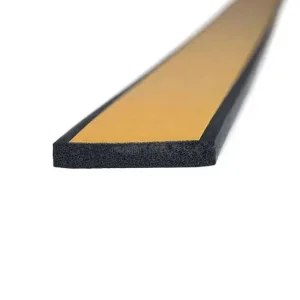
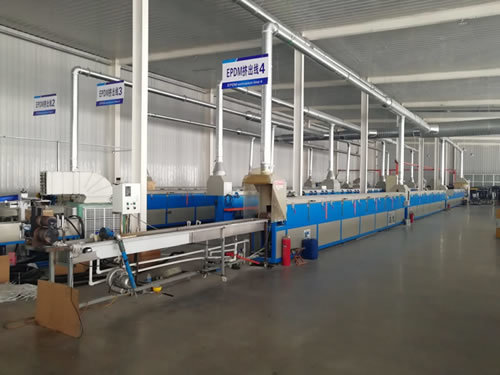
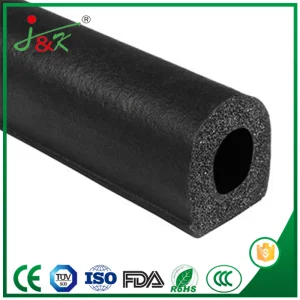
Equipped with continuous microwave vulcanization lines and multi-component extrusion equipment. We manufacture complex profile cross-sections, combining dense core materials, cellular micro-sponge components, and internal spring-steel carriers in a single continuous process pass.
Our testing laboratory verifies elastomer characteristics. We perform mechanical aging tests under simulated extreme conditions, determining compression set, ozone exposure cracking thresholds, color fastness, and dimensional deviations using non-contact optical projectors.
Accelerating prototype cycles from CAD modeling to structural extrusion die-cutting. Using precision wire-cut EDM machinery, we fabricate custom calibration templates and extrusion dies, minimizing lead times to deliver functional samples in weeks.
Automotive edge trim seals operate in diverse ecosystems. Here is how our sealing systems are deployed across various industries:
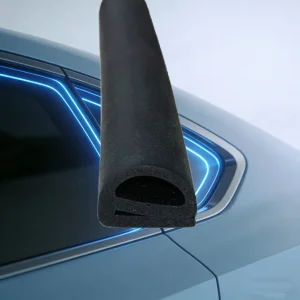
Modern EVs do not have engine combustion noise, making wind and road noise (NVH) much more noticeable inside the cabin. We supply high-precision three-composite door seals and waterproof EPDM glass run profiles. These minimize wind resistance and turbulence at the A-pillar and door interfaces, while offering superior dustproofing and weatherproofing.
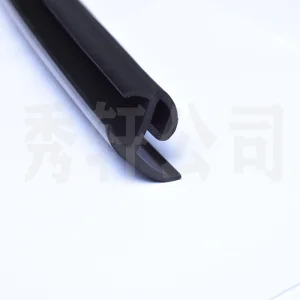
Heavy-duty trucks, construction excavators, and agricultural vehicles undergo severe structural vibrations and dusty operating conditions. Our metal-reinforced edge protector profiles ensure tight mechanical gripping onto steel plate edges, resisting shearing, impact, and high-pressure washdowns.
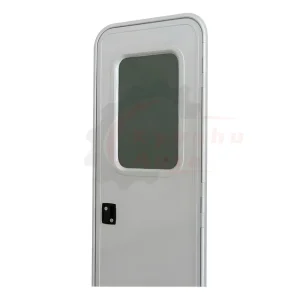
Recreational vehicles face complex structural interfaces and changing weather. Our product range includes custom weatherseals for slide-out assemblies and heavy-duty frame seals for Caravan doors. These prevent water ingress and maintain thermal insulation over long highway trips.
With an export network covering industrialized markets including Germany, the United States, Japan, France, Australia, Brazil, and Türkiye, Zhejiang Haala provides localization support and compliance services:
To meet global carbon-neutrality initiatives, the automotive sealing industry is transitioning toward eco-responsible technologies:
TPVs are replacing thermoset EPDM in specific vehicle areas due to their recyclability and lower weight. Unlike EPDM, which requires cross-linking sulfur/peroxide vulcanization, TPVs can be thermoformed and re-melted, lowering the environmental footprint of the component lifecycle.
Using nitrogen-gas injection foaming in EPDM sponge profiles reduces seal weight by up to 25% without compromising mechanical rebound or compression set properties, contributing to vehicle weight reduction and range extension in electric vehicles.
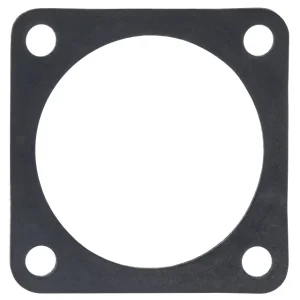
High-Durability Protectors, Structural Seals, and Specialty Elastomeric Gaskets
Answering Critical Technical Questions for Engineering and Procurement Specialists
 Haala Parts