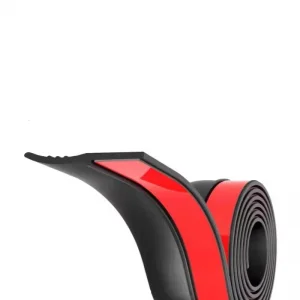
Direct from engineering floor to assembly line: examine our leading structural profiles engineered to withstand dynamic physical stresses, environmental hazards, and severe NVH criteria.
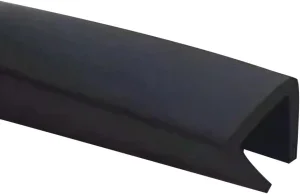
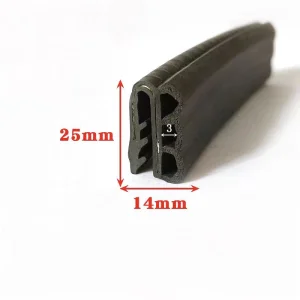
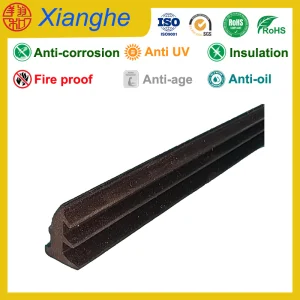
Understanding structural dynamics, material properties, and supply pipeline criteria for next-generation vehicle architectures.
In modern automotive design, the performance threshold for flexible automotive seals has evolved dramatically. Modern vehicles demand airtight precision. Sealing systems must act as dynamic shields protecting passenger spaces and sensitive powertrain systems against extreme thermal gradients, sound pressure anomalies, dynamic wind resistance, and water ingress. The global automotive sector operates at a cross-section of heavy environmental pressures and micro-precision requirements, meaning suppliers are no longer mere component manufacturers but vital systems engineering partners.
Global logistics, supply continuity, raw material pricing volatility, and regional compliance factors drive modern procurement pipelines. Tier-1 automotive integrators expect zero-defect parameters alongside strict compliance with quality guidelines. Key factors such as compression-set rates, ozone aging degradation resistance, UV performance, and structural metal insert adhesion are strictly monitored to ensure the vehicle remains silent and insulated for its entire lifetime. Whether it is passenger cars, commercial vehicle cabins, heavy cargo containers, or refrigerated transportation enclosures, specialized sealing solutions are vital to preserving vehicle integrity and reducing overall carbon footprints.
A premier private enterprise dedicated to scientific development, dynamic engineering, and world-class production of custom vehicle sealing systems.

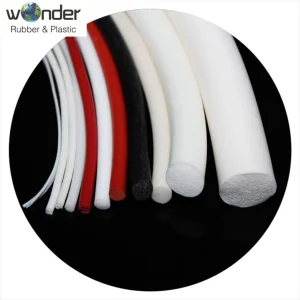
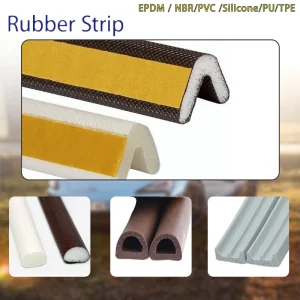
We host complete EPDM compound extrusion lines, dense-sponge-steel core multi-composite extrusion systems, modified PVC profiling, and specialized silicone molding departments to satisfy heavy OEM demands.

Equipped with complete test benches, flat vulcanizing presses, custom tooling CNC centers, and raw material validation labs. We deliver a complete one-stop solution from raw rubber compounding to direct shipping.

Supplying Tier-1 markets across Germany, the United States, Japan, France, Australia, India, Brazil, Russia, Turkey, Iran, and Nigeria. Highly appraised for consistency, on-time logistics, and field reliability.
Zhejiang Haala Automotive Parts Co., Ltd. (operating manufacturing facilities in Matun Industrial Zone, Qinghe County) utilizes premium grade elastomers to produce high-specification industrial sealing profiles. We specialize in:
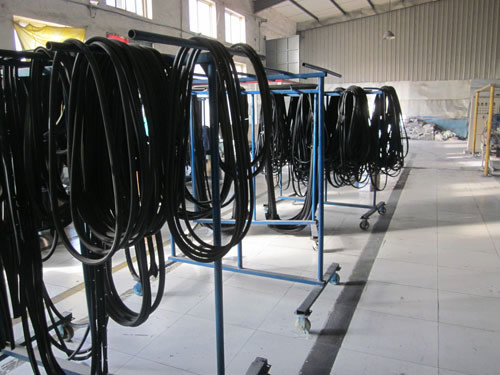
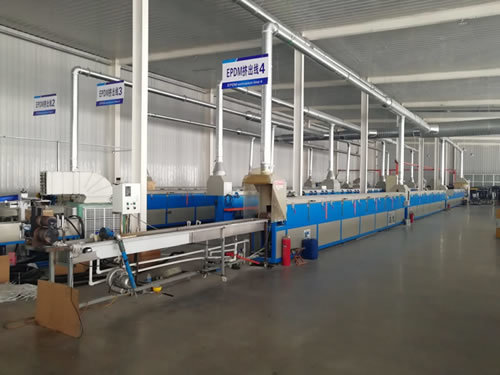
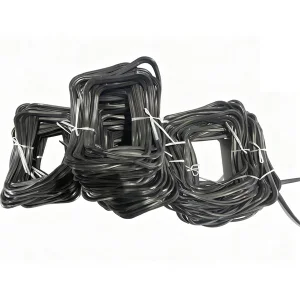
We pride ourselves on dynamic raw material controls. Our chemical compounding ensures EPDM sponge and modified rubber structures preserve their physical memory over years of dynamic compression cycles. By keeping design, formulation, extrusion, and secondary operations like corner vulcanization inside a single facility, we optimize output speeds, control critical dimensions, and minimize operational costs.
Adhering to our core policy of "Reputation first, quality first", we focus on human-centric innovation, engineering-driven design, and technical competitiveness. We welcome international partners seeking reliable development support, customized tooling parameters, and high-volume manufacturing agreements.
A direct comparison of rubber compounds, structural profiles, and performance values under heavy industrial conditions.
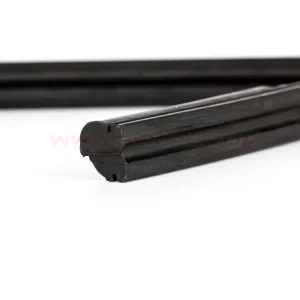
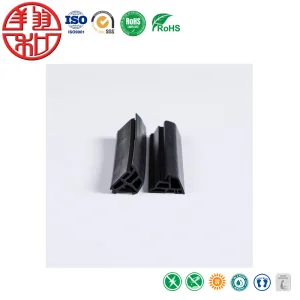
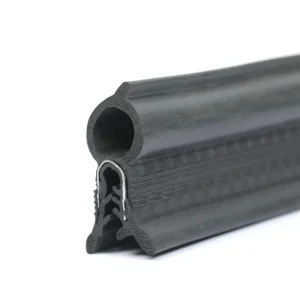
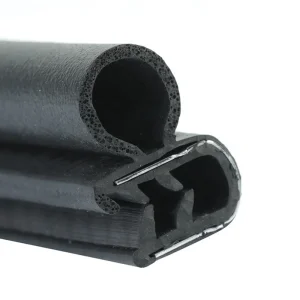
Modern vehicle construction requires careful coordination of mechanical, acoustic, and thermal forces. Design teams are shifting away from traditional single-elastomer extrusions toward multi-material profiles (dual-durometer rubber with embedded metallic carriers). These systems secure themselves without messy adhesives and support fast assembly. The integration of steel carriers or wire carriers inside dense EPDM provides excellent retention forces on metal flanges, while the sponge EPDM bulb provides low closure force and superior water resistance.
| Material / Profile Type | Primary Physical Properties | Key NVH & Acoustic Impact | Typical Industrial Applications |
|---|---|---|---|
| Co-extruded EPDM with Steel Core | Extreme tensile grip, weather & ozone resistance, wide thermal window (-40°C to 120°C) | Substantial attenuation of high-frequency road hiss and vibration dampening | Vehicle Door Frames, Trunk Gaps, Engine Hood Protection |
| Foamed Silicone Rubber Gaskets | Low compression set, high thermal range (up to 200°C), flame-retardant grade | Maintains structure under wide pressure differences; exceptional acoustic seal | Battery Packs, EV Powertrains, Refrigerated Cabinet Frames |
| Modified Thermoplastic PVC Trim | Highly cost-efficient, colored profile capabilities, moderate resistance properties | Basic structural vibration dampening, dust protection, and water diversion | Cabinet door panels, secondary seals, structural edge trims |
| Triple-Composite Dense Sponge | Combines rigid base, highly flexible bulb, and slip-coat coating technology | Optimized seal compression force; eliminates squeaking during body flex | High-speed passenger trains, aerodynamic cabin seals, vehicle sunroofs |
Additionally, the automotive shift toward electric vehicles (EVs) introduces new NVH challenges. Without combustion engine noise, wind friction and road vibration are much more noticeable in the cabin. Therefore, flexible automotive seals must offer optimized acoustic properties. Formulations are engineered using low-friction coating materials (such as slide-coat coatings or flocking) to prevent friction squeaks when windows and doors shift during highway driving.
Simplifying the transition from component design to manufacturing line deployment across international boundaries.
In global industrial commerce, products must meet international standards. Our manufacturing lines run under strict control processes. Every batch of EPDM, silicone, and PVC undergoes physical testing to verify compliance with REACH and RoHS standards, protecting end consumers from harmful substances. Additionally, our materials meet flame-retardant standards (e.g., FMVSS 302, UL 94-V0) required for automotive passenger spaces and public transport vehicles.
To support global supply chains, we offer JIT (Just-In-Time) logistics options, technical design reviews, and local import coordination. From the moment custom tooling is requested, our team conducts FEA (Finite Element Analysis) of the seal profile to simulate closing pressures. This ensures that when the product reaches your production line, it installs quickly and functions reliably under extreme environmental conditions.
Detailed insights from our technical support team answering critical engineering and procurement questions.
Examine our heavy-duty weatherstripping and specialized industrial profiles designed to meet tough engineering standards.
 Haala Parts