Explore our industrial-grade automotive weatherstrips designed to deliver optimal noise isolation, chemical resistance, and air tightness under severe mechanical stress.
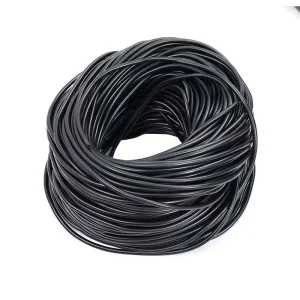
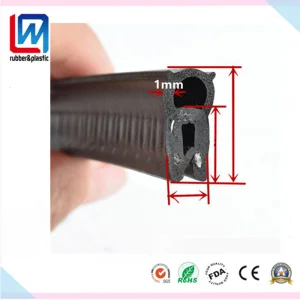
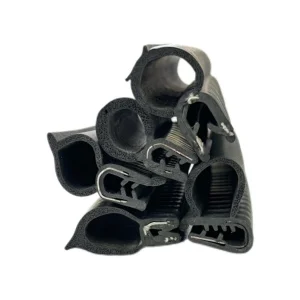
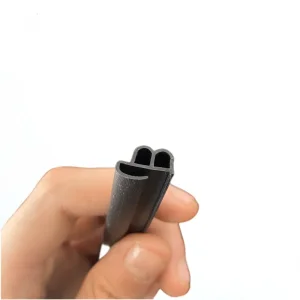
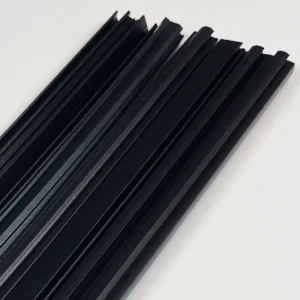
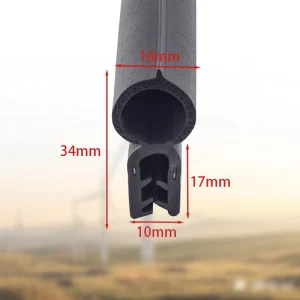
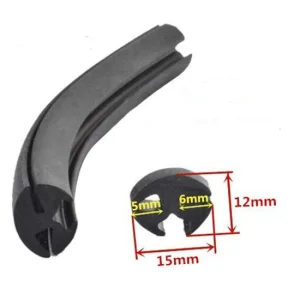
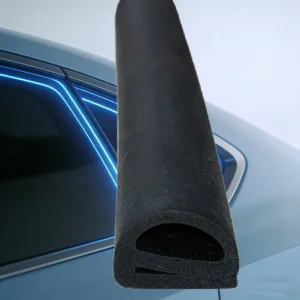
In contemporary vehicle design, the role of automotive weatherstripping and air leakage seals has progressed far beyond rudimentary water exclusion. Modern engineering requires seals to act as multi-functional barriers. They manage high-frequency acoustic transmission (reducing NVH—Noise, Vibration, and Harshness), seal out micro-dust particles, prevent thermal transfer, and maintain static pressure differentials within the passenger cabin.
With the rapid shift toward Electric Vehicles (EVs), structural seal engineering has encountered new performance parameters. In the absence of masking internal combustion engine noise, wind shear and road noise become highly noticeable. High-performance, low-density microcellular EPDM sponge profiles and co-extruded composite seals are crucial to preserving a quiet ride.
Ethylene Propylene Diene Monomer (EPDM) is the primary material choice for high-durability automotive profiles. Its polymer backbone provides excellent resistance against ultraviolet radiation, ozone oxidation, moisture infiltration, and temperature extremes ranging from -50°C to +150°C. We configure EPDM through peroxide curing or sulfur curing processes depending on compression set targets and tensile requirements.
Acoustic Isolation: Continuous profiles help suppress wind noises between 1 kHz and 8 kHz, the primary range for interior cabin discomfort.
Thermal Properties: Maintaining structural seal integrity limits active energy draw on automotive HVAC systems, directly preserving EV battery range.
Density Selection: We balance hard, dense EPDM bases (Durometer Shore A 60-80) with dynamic sponge dynamic bulbs (density 0.4 to 0.75 g/cm³) to yield minimal closing force and strong elastic recovery.
Zhejiang Haala Automotive Parts Co., Ltd. is a medium-sized private enterprise mainly engaged in the production of various types of vehicle sealing strips. We integrate scientific research, development, production, and sales to offer complete customization for our clients.
Operating out of our advanced production facility, our company specializes in producing a comprehensive list of extruded, molded, and composite products. This range includes:
We manage our operations through a one-stop production model that coordinates raw material preparation, customized compound mixing, high-precision CAD/CAM mold development, continuous microwave vulcanization lines, and post-finishing processes (such as dynamic coating and tape lamination).
Our engineering laboratory features performance evaluation equipment designed to test parameters like dynamic shear strength, ozone decay rates (ASTM D1149), thermal aging, and compression deflection curves.
Our continuous microwave vulcanization lines enable high-speed processing, ensuring structural uniformity throughout long extrusion runs.
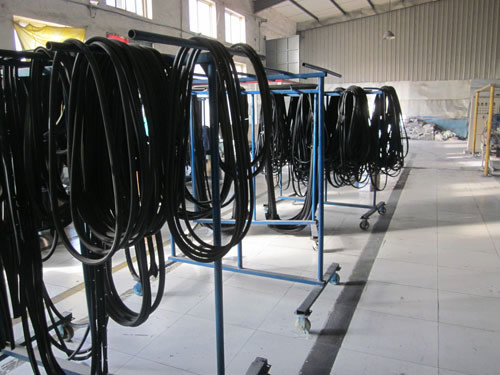
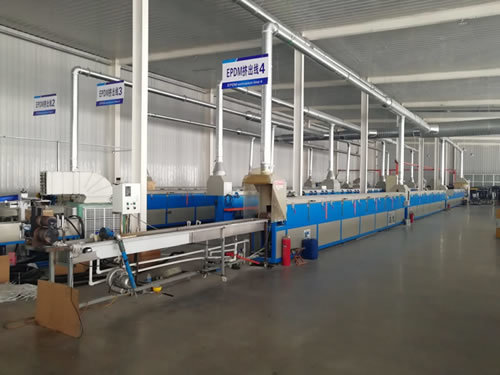
Combining technological innovation with optimized production processes to deliver reliable performance for global buyers.

We handle professional production of various automotive sealing strips, door/window profiles, and HVAC/refrigeration gaskets. Our continuous co-extrusion technology enables us to combine dense compounds, sponge compounds, and steel wire matrices in a single production pass.

Our operations are backed by seasoned technical leadership and clear management systems. Testing processes span from raw compound certification to dimensional validation using non-contact optical comparators, supporting a reliable workflow from CAD to finished part.

Our products are shipped to buyers in Japan, Germany, the United States, France, Iran, Australia, Türkiye, India, Nigeria, Brazil, Russia, and other countries. We work to meet regional quality expectations, whether supplying Tier-1 automotive firms or heavy equipment manufacturers.
A reference table outlining physical tolerances and compound parameters for our automotive sealing profiles.
| Polymer Base / Profile Category | Hardness Rating (Shore A / Density) | Tensile Strength Threshold | Working Temp Limit | Primary Industrial Standard |
|---|---|---|---|---|
| Dense EPDM (Steel Core Reinforced) | Shore A 65 - 75 | ≥ 10.5 MPa | -40°C to +125°C | ASTM D2000 / SAE J200 |
| Microcellular EPDM Sponge | 0.45 - 0.65 g/cm³ | ≥ 2.5 MPa | -50°C to +120°C | ISO 3934 / Din 7863 |
| VMQ High-Grade Silicone Foam | 0.25 - 0.40 g/cm³ | ≥ 1.8 MPa | -60°C to +200°C | FDA 21 CFR 177.2600 |
| Thermoplastic Vulcanizate (TPV/TPE) | Shore A 55 - 85 | ≥ 8.0 MPa | -40°C to +110°C | ISO 2285 (Tension Set) |
Our bottom selection features co-extruded frame trims, trunk line buffers, self-adhesive windshield tracks, and high-deflection damping profiles.
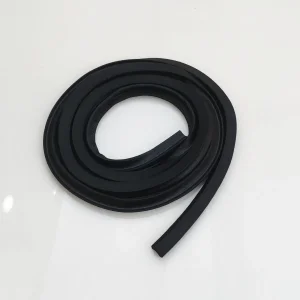
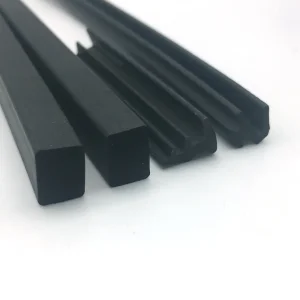
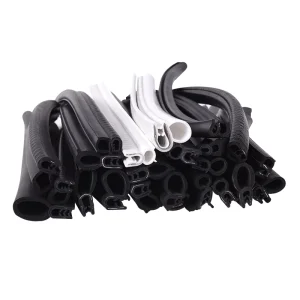
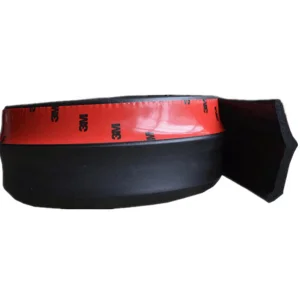
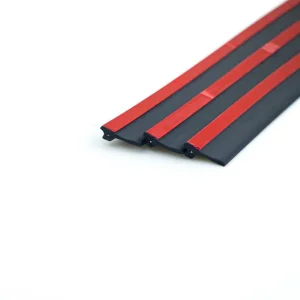
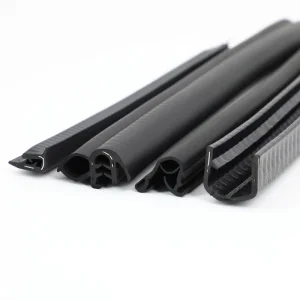
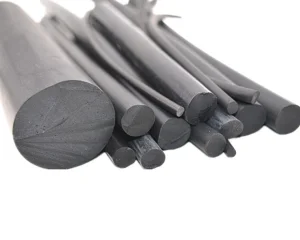
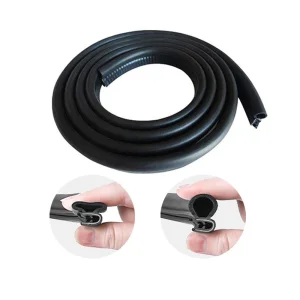
When procurement professionals evaluate suppliers for automotive sealing profiles, the focus extends beyond cost per meter. It centers on the total cost of ownership, which includes tooling setup, compound quality consistency, and shipment transit logistics.
China's Manufacturing Cluster Advantage: Operating from the Hebei/Zhejiang industrial corridor gives Zhejiang Haala raw material sourcing options, local downstream compounding facilities, and proximity to shipping networks. These elements allow us to provide favorable turnaround times for high-volume custom orders.
Our dynamic tool-making facility allows us to turn around die profiles in 7 to 10 working days. This fast setup accelerates physical mockups and trial testing, helping OEM clients stay on track for program launches.
To support quality assurance, we submit complete documentation packages to wholesale buyers, including:
Find answers to common questions regarding EPDM compound parameters, custom molding, tolerances, and B2B ordering.
We manufacture our extrusions in accordance with ISO 3302-1 Class E2 as standard, with the capability to meet Class E1 high-precision tolerances for specialized mating connections. For molded solid components, we conform to ISO 3302-1 Class M2.
We utilize multi-manifold cross-head extrusion lines that process dense EPDM, microcellular sponge EPDM, and a steel wire carrier or stamped steel segment core simultaneously. The steel matrix is embedded in the dense rubber base to provide a firm grip on sheet metal edges, while the sponge bulb seals the interface.
We offer various adhesive systems to suit different automotive paint surfaces. Options range from standard double-sided tissue tapes for static seals to high-bond 3M acrylic foam tapes (VHB). These are suitable for dynamic structural seals exposed to weather and wind shear.
Our microcellular EPDM sponge profiles show a compression set of ≤ 25% to 35% when tested at 70°C for 22 hours under 50% compression (ASTM D395 Method B). This level of recovery ensures the seal maintains a consistent barrier over extended vehicle operation.
We follow a quality management approach that includes automated inline laser monitoring to check cross-sectional geometry during extrusion. We also perform batch inspections of the raw compounds to ensure uniform vulcanization and density before processing.
Yes, we formulate compounds to meet specific performance requirements. This includes flame-retardant profiles compliant with UL 94 V-0 or FMVSS 302, oil-resistant nitrile (NBR) blends, and high-temperature silicone profiles.
 Haala Parts