In the contemporary automotive landscape, the battleground for consumer satisfaction has shifted dramatically towards the passenger cabin. With the rapid ascendancy of Electric Vehicles (EVs) and Hybrid Electric Vehicles (HEVs), the traditional masking effect of internal combustion engine (ICE) noise has dissipated. This structural shift renders secondary noise sources—such as high-frequency wind rushing, tire-to-road contact, and chassis vibration—far more perceptible to vehicle occupants. Consequently, the requirements for high-performance automotive acoustic seals have evolved from basic weather protection to complex, multi-functional Noise, Vibration, and Harshness (NVH) mitigation barriers.
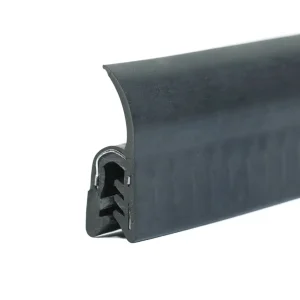
Modern acoustic sealing profiles serve as critical boundary barriers. Under dynamic loading conditions, they must prevent structural resonance, block high-frequency sound transmission, and maintain a hermetic seal against pressurized water and airborne particulates. The engineering complexity of these components involves precise control of the elastomer's dynamic spring rate, damping coefficient, and insertion/extraction forces. To meet these stringent specifications, Tier-1 automotive suppliers and OEMs rely on highly specialized manufacturing partners capable of formulating advanced compounds and executing multi-component co-extrusions.
Engineered to isolate high-frequency road and wind noises (1 kHz to 8 kHz), ensuring a whisper-quiet cabin environment for premium autonomous and electric vehicles.
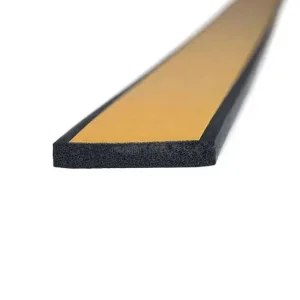
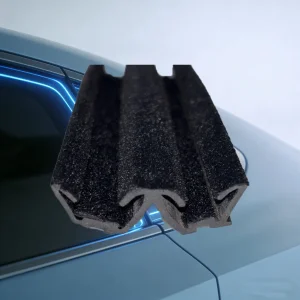
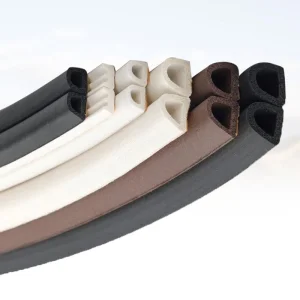
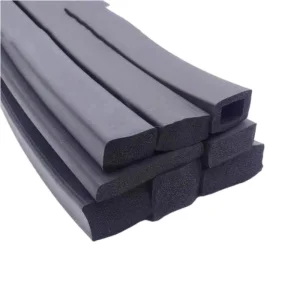
Closed-cell EPDM sponge technology provides superior water tightness and low compression set under persistent mechanical deformation.
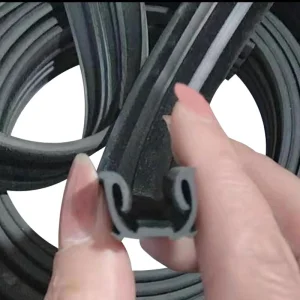
Integrate advanced surface treatments including high-density electrostatic flocking and low-friction silicone/polyurethane coatings to prevent glass binding.
At the core of any exceptional sealing system is its material formulation. Zhejiang Haala Automotive Parts Co., Ltd. utilizes proprietary compound variations of EPDM (Ethylene Propylene Diene Monomer), silicone, TPE, and modified PVC. EPDM remains the industry benchmark for automotive exterior applications due to its outstanding resistance to heat aging, ozone degradation, ultraviolet (UV) radiation, and extreme climatic cycles.
Our material engineering division designs compounds according to strict OEM standards. By adjusting the ethylene-to-propylene ratio and controlling diene content, we optimize physical properties such as tensile strength, elongation at break, and low-temperature flexibility (-50°C).
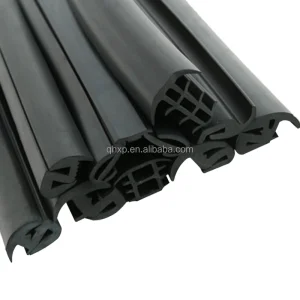
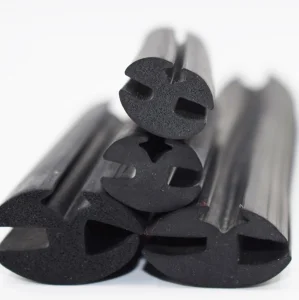
For areas requiring dynamic compressibility—like car door inner seals, trunk lids, and sunroof openings—we apply EPDM sponge (foam) rubber. This material features a fine closed-cell structure generated through synchronized chemical blowing agents, allowing the seal to compress with low load force while providing quick elastic recovery. Conversely, structural elements like glass run channels utilize high-density dense EPDM (40 to 90 Shore A hardness) to ensure mechanical retention and frame support.
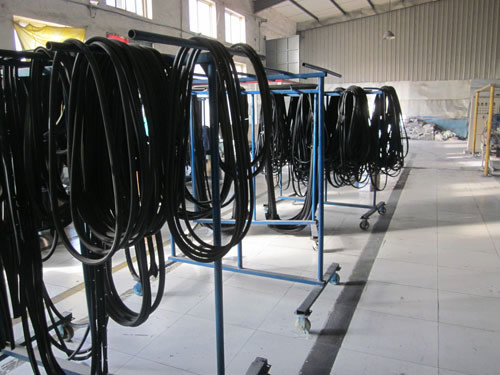
Complex vehicle geometries demand sealing systems that incorporate multiple materials into a single cross-section. Our advanced continuous vulcanization lines utilize tri-extrusion and quad-extrusion technologies. We seamlessly combine:
Sealing profiles do not exist in isolation; they are highly customized to the vehicle segment, operational climate, and physical stress points. The global demand for acoustic seals spans diverse transportation and structural platforms:
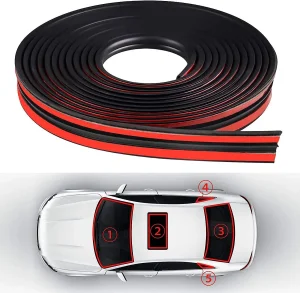
Premium door weatherstrips, dual-bulb gaskets, and solar panel glass runs. Engineered to minimize aerodynamic turbulence at highway speeds, shielding passenger compartments from external frequency disturbances.
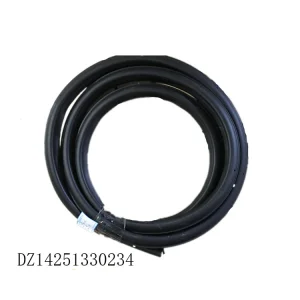
Specialized cabin seals like the Shacman X3000 spare parts two-way seal. These heavy-duty profiles are optimized to endure severe mechanical stress, chassis twists, and high-amplitude diesel vibrations.
Closed-cell EPDM sponge profiles designed to seal high-capacity commercial HVAC air handlers. They isolate noise from internal blowers and compressors while maintaining a thermal barrier to prevent condensation.
Localized support requires adjusting chemical compositions to perform in diverse environments. For products destined for Northern Europe, Russia, or Northern North America, compounds are modified with plasticizers to ensure the elastomer does not crystallize or crack at -40°C. For tropical zones like Brazil or Southeast Asia, we boost antioxidant and UV-absorber packages to prevent cracking and mechanical degradation under persistent UV exposure and high humidity.
Operating from the Matun Industrial Zone, Qinghe County, Zhejiang Haala Automotive Parts Co., Ltd. leverage a highly integrated manufacturing cluster. This localization offers an end-to-end ecosystem covering raw material sourcing, customized compounding, rapid CAD/CAM tooling mold development, and high-speed vulcanization lines.
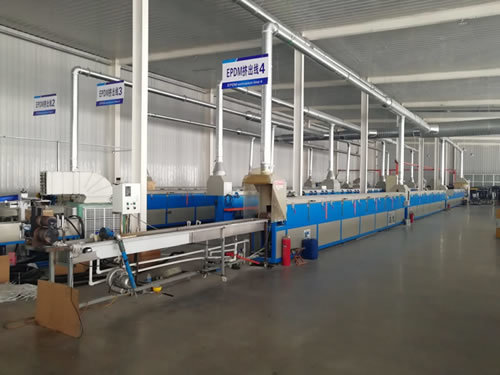
Our engineering workflow begins with digital design and Finite Element Analysis (FEA) of the sealing profiles to predict compression load deflection (CLD) and insertion forces. Once the profile geometry is validated, our in-house CNC tooling shop fabricates custom extrusion dies. This vertical integration reduces prototype turnaround cycles to days rather than weeks.
With continuous microwave vulcanization lines, hot-air tunnels, and automated injection-molded corner jointing equipment, we manage the entire production chain. This ensures consistent tolerances, high surface finish quality, and reliable cross-sectional dimensions across mass production runs.
To maintain our standing as a trusted Tier-1 supplier and exporter, Zhejiang Haala Automotive Parts Co., Ltd. adheres to a strict zero-defect quality management philosophy. Our manufacturing facilities operate under the IATF 16949:2016 quality management standard, which is mandatory for the global automotive supply chain.
Our internal test labs subject each production batch to rigorous evaluation:
By ensuring full compliance with international standards, including REACH, RoHS, and various automotive OEM regulations, we guarantee trouble-free integration into assembly lines across Europe, North America, the Asia-Pacific region, and beyond.
As the automotive industry pivots toward autonomous driving, electric propulsion, and sustainable materials, the technical requirements for sealing profiles continue to shift. Our research focuses on:
Developing microcellular EPDM compounds and hollow-bulb profile structures to reduce seal weight by up to 25% without sacrificing mechanical strength or acoustic insulation.
Expanding the use of recyclable, co-extruded TPV/TPE components. This supports OEM requirements for circular economy manufacturing and simplified end-of-life vehicle recycling.
Developing integrated conductive elements or sensor strips in side seals to prevent pinch hazards in automated doors and provide real-time diagnostic feedback on seal integrity.

Professional production of various automotive sealing strips, door and window sealing strips, air conditioning sealing strips, furniture sealing strips, electrical sealing strips, and foam sealing strips.

The company has strong technical strength and management experience. The testing methods are complete, forming a one-stop production mode of raw material preparation, mold development, and product molding.

Our products are sold to Japan, Germany, the United States, France, Iran, Australia, Türkiye, India, Nigeria, Brazil, Russia and other countries, and have received high praise from customers.
 Haala Parts