Why Choose Dustproof Sealing Solutions for Vehicles?

Time:2026-10-07 Author:Mason
0%

Dust, water, road salt, and vibration can quietly damage vehicle systems. A small gap around a connector or actuator may allow contamination inside. Over time, this can cause corrosion, electrical faults, noise, and costly maintenance. That is why manufacturers need a practical method for choosing protective sealing components.

The central question is “How to choose dustproof sealing solutions for vehicles” under real operating conditions. Engineers should examine temperature range, pressure changes, vibration, compression, material compatibility, and cleaning chemicals. EPDM often suits weather exposure, while silicone supports wider temperature demands. Nitrile may perform well against oils, but it is not ideal for every environment. Check the enclosure design, too. A strong seal cannot correct poor surface preparation or uneven compression.

Dr. Robert Flitney, author of the Seals and Sealing Handbook, expressed a useful principle: “A seal succeeds only when its design matches the environment.” This idea remains important in vehicle engineering. Testing should include dust ingress, water spray, thermal cycling, and repeated movement. Laboratory results help, but field experience can reveal unexpected weaknesses. No seal is perfect.

A reliable selection process also considers service life, installation quality, supplier consistency, and documented test data. The cheapest gasket may become the most expensive choice after early failure. Sometimes, engineers focus too heavily on the material and overlook assembly conditions. That is an understandable mistake, but it deserves review. Choosing dustproof sealing solutions is not simply a purchasing decision. It is a balance between protection, durability, manufacturability, and long-term vehicle performance.
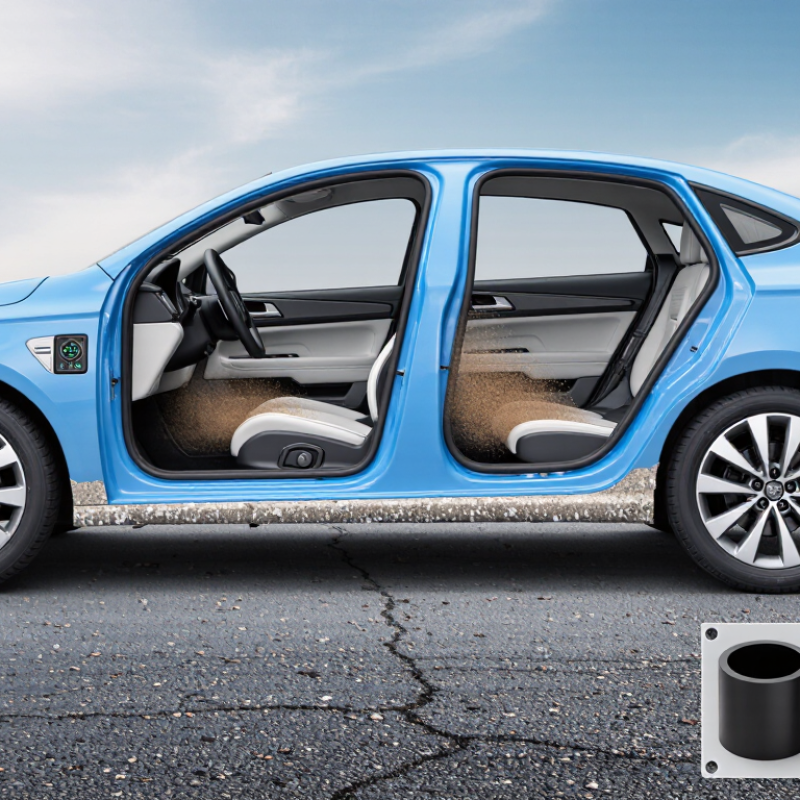
Why Choose Dustproof Sealing Solutions for Vehicles?

What Dustproof Sealing Solutions Are

Dustproof sealing solutions are protective components that limit the entry of dust, sand, and fine road particles into vehicle systems. They include rubber gaskets, sealing boots, O-rings, membranes, and labyrinth structures. Each design creates a controlled barrier around doors, sensors, wiring, bearings, and electrical housings.

The sealing material must match its working environment. Flexible elastomers can maintain contact during vibration and temperature changes. Reinforced boots protect moving joints from grit while allowing controlled movement. A labyrinth seal uses overlapping paths to slow particle entry without constant friction. In practical vehicle inspections, technicians look for compression marks, hardened edges, cracks, and uneven gaps. Small defects can become serious contamination routes.

Good dustproof sealing also depends on installation, not only material quality. Surfaces should be clean, aligned, and free from sharp damage. Compression must be sufficient, but excessive pressure may accelerate wear. Testing can include dust exposure, vibration, temperature cycling, and repeated opening or movement.

Real roads are less predictable. Fine dust may pass through a gap that looked acceptable in a workshop. Seals also age earlier when exposed to oil, ultraviolet light, or cleaning chemicals. This is an area worth reconsidering: a seal that performs well in a laboratory may need different protection in a dry, unpaved environment. Inspectors should record service conditions and replace damaged parts before particles reach sensitive components.

How Vehicle Dust Enters Sensitive Components

Why Choose Dustproof Sealing Solutions for Vehicles?

How Vehicle Dust Enters Sensitive Components

Dust rarely enters through one dramatic opening. It moves through connector gaps, cable exits, vents, and poorly compressed seals. Vibrations make these paths wider over time. Thermal cycling also changes seal pressure. A hot housing expands, then contracts in cold air.

The European Environment Agency’s Air Quality in Europe 2024 report found that 96% of Europe’s urban population faced PM2.5 levels above WHO guidelines in 2022. These fine particles can settle on circuit boards, sensors, and contact surfaces. Moisture then turns loose dust into a conductive film. Our first assumption is often wrong. A visible seal may still leak under movement.

ISO 20653 defines IP6KX as protection against dust ingress under specified test conditions. This rating is useful, but it does not copy every road environment. Gravel vibration, pressure changes, and repeated washing can expose weak points. Field inspections often reveal uneven compression around corners and fasteners. That detail matters more than a perfect laboratory photograph.

Tips: Check compression marks after assembly. Protect cable exits with strain relief. Test seals after vibration and temperature cycling. Do not rely on adhesive alone. Reinspect after service work.

Key Benefits of Dustproof Sealing in Vehicles

Dustproof sealing protects vehicle components from fine grit, road dust, and dry soil. These particles can enter connectors, sensors, bearings, and control housings. Once inside, they may increase friction or interrupt electrical signals. A reliable seal helps maintain stable performance in harsh driving conditions. It also reduces cleaning work during regular maintenance.

During vehicle inspections, technicians often find dust around poorly fitted covers and cable openings. Small gaps matter. A correctly selected sealing solution should match the joint’s movement, temperature, and pressure exposure. It must remain flexible after repeated vibration. However, sealing alone cannot fix poor assembly or damaged parts. I have seen clean-looking seals fail because their surfaces were oily or uneven.

Tips: Clean contact surfaces before installation. Check for cracks after heavy vibration or off-road use. Press the seal evenly around corners, and avoid stretching it too far. Keep drainage paths open where moisture may collect. A seal that blocks dust but traps water needs reconsideration. Regular inspection is simple, but it is often skipped.

Types of Dustproof Sealing Solutions for Vehicles

Why Choose Dustproof Sealing Solutions for Vehicles?

Dustproof sealing solutions protect cabins, power electronics, sensors, and moving joints from abrasive particles. According to the European Automobile Manufacturers’ Association, global vehicle production reached about 76 million units in 2023. At this scale, small sealing failures can create large maintenance costs. Real workshop experience shows that dust often enters through overlooked cable routes, not only through doors.

Common types include door, hood, trunk, and tailgate weatherstrips. EPDM rubber suits these areas because it resists weathering and repeated compression. Glass-run channels guide windows while limiting dust and wind noise. Cable grommets and wiring boots close irregular openings around connectors. They need flexible lips, secure retention, and correct hole geometry. A slightly loose grommet can expose wiring within months.

Mechanical areas require different designs. CV joint boots protect grease from dust and moisture during constant flexing. Battery and motor housings often use molded elastomer gaskets or liquid-applied seals. These solutions support enclosure targets described in ISO 20653, including dust-protection classes IP5KX and IP6KX. Testing should include vibration, temperature cycling, pressure washing, and compression-set checks. MarketsandMarkets’ automotive seals research identifies electrification as a major demand driver, especially for battery and powertrain sealing. The report’s projections are useful, but they cannot replace vehicle-specific testing. Real contamination is messier. Dust size, installation errors, and aging still deserve closer attention.

How to Select and Maintain Vehicle Seals

Why Choose Dustproof Sealing Solutions for Vehicles?

Selecting vehicle seals requires more than choosing the thickest rubber. Measure the channel width, compression depth, and corner radius carefully. EPDM often suits doors, hoods, and exposed body panels because it handles weather and ozone well. Silicone can work in wider temperature ranges, but it may tear under rough installation. For engine-bay areas, confirm resistance to heat, oil mist, and vibration. A poorly fitted seal can trap dust instead of blocking it. Check the mating surfaces too. Remove rust, old adhesive, and sharp edges before fitting. A short sample installation can reveal gaps that measurements miss.

Maintenance keeps sealing performance stable. Clean seals with mild soap, water, and a soft cloth. Avoid harsh solvents and stiff brushes. Inspect them after deep cleaning, off-road travel, or dusty driving. Press the rubber gently. It should feel flexible, not brittle or permanently flattened. Replace seals with cracks, loose corners, or visible compression loss. Door alignment matters as well. Uneven pressure may indicate worn hinges or latches, not just a damaged seal. I once overlooked a small corner gap during inspection. Fine dust entered within days. That mistake changed my checklist. Still, visual inspection is not enough. Record installation dates and check high-dust vehicles more often. A seal can look intact while quietly losing elasticity.

Why Choose Dustproof Sealing Solutions for Vehicles?

Typical continuous-use temperature ranges help engineers select vehicle seal materials for engine compartments, doors, underbody areas, and electrical enclosures.

Silicone and FKM generally provide the broadest temperature resistance, while EPDM is commonly selected for weather, water, and ozone exposure. NBR is suitable for many oil-contact applications. Actual performance depends on compound formulation, compression, chemicals, UV exposure, and installation quality. Inspect seals regularly for cracks, flattening, hardening, and loss of compression.

FAQS

Where does vehicle dust usually enter?

Dust enters through connector gaps, cable exits, vents, and weakly compressed seals. Not one opening.

Can a visible seal still leak dust?

Yes. Vibration can widen small paths, while heat and cold change seal pressure. Appearance can mislead.

Why do fine particles threaten sensitive components?

Fine dust can settle on circuit boards, sensors, and electrical contacts. Moisture may turn it into a conductive film.

What does an IP6KX rating indicate?

IP6KX indicates dust protection under specified testing conditions. It cannot represent every road, wash, or vibration environment.

Which seals suit vehicle doors and body openings?

Weatherstrips commonly protect doors, hoods, trunks, and tailgates. EPDM rubber handles weather exposure and repeated compression well.

How are cable openings protected?

Cable grommets and wiring boots close irregular openings around connectors. They need flexible lips, firm retention, and accurate hole geometry.

What sealing solutions protect batteries and motor housings?

Molded elastomer gaskets and liquid-applied seals help close these housings. Their performance should be checked during vibration and temperature cycling.

How can technicians check sealing quality after assembly?

Inspect compression marks around corners and fasteners. Protect cable exits with strain relief, then recheck seals after service work.

Is adhesive alone enough for dust sealing?

Usually, no. Mechanical retention and correct compression provide stronger support, but I would still verify the complete design.

Conclusion

Dustproof sealing solutions are protective components designed to block dust, sand, moisture, and other contaminants from entering sensitive vehicle areas such as electrical connectors, sensors, motors, bearings, and control units. Dust can enter through gaps, joints, cable passages, doors, and ventilation points, leading to abrasion, corrosion, overheating, poor electrical contact, and reduced component performance. By creating a reliable barrier, dustproof seals help improve vehicle durability, safety, operating stability, and maintenance efficiency.

Common solutions include rubber gaskets, O-rings, lip seals, molded seals, sealing boots, and foam-based barriers, with each type suited to different locations and working conditions. How to choose dustproof sealing solutions for vehicles depends on factors such as sealing position, temperature range, vibration, pressure, chemical exposure, movement, and required service life. Proper installation, regular inspection, surface cleaning, and timely replacement are also essential to maintain sealing performance and prevent premature failure.

Mason

Mason

Mason is a seasoned marketing professional with a deep expertise in the company's offerings and a passion for driving brand awareness. With a strong background in digital marketing strategies, he has an innate ability to connect with diverse audiences and effectively communicate product benefits.......