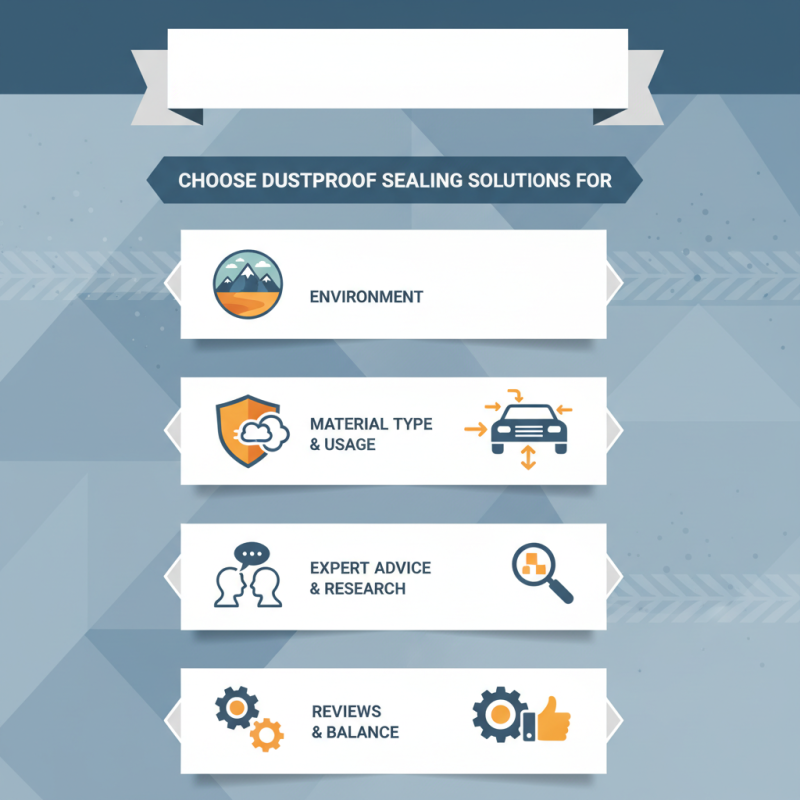
Choosing the right dustproof sealing solutions for vehicles can be challenging. Understanding how to choose dustproof sealing solutions for vehicles involves considering various factors. Proper sealing ensures vehicle longevity and enhances performance.
Consider the environment in which the vehicle operates. Different terrains can expose vehicles to dust and debris. It’s essential to select materials that withstand harsh conditions. Evaluate the specific needs based on vehicle type and usage.
Seek expert advice if you're unsure about your options. Manufacturers often provide guidelines based on their expertise. However, it's wise to research various products. Peer reviews and testimonials can shed light on reliability. A balanced approach may reveal unexpected insights.
Understanding the Importance of Dustproof Sealing in Vehicles
Dustproof sealing solutions play a crucial role in vehicle longevity. These seals prevent dust, dirt, and debris from entering sensitive areas of a vehicle. If dust infiltrates, it can damage components like electronics and the engine. Neglecting dustproofing can lead to costly repairs and shorten the life of your vehicle.
Understanding the importance of these seals involves recognizing where dust typically enters. Common entry points include doors, windows, and any movable parts. Proper seals create a barrier, ensuring a cleaner and safer environment inside. A reliable dustproof seal is not just about aesthetics; it impacts performance. Contaminants can degrade internal systems over time, making it essential to choose effective materials and techniques.
While not every seal will perform perfectly, investing in quality options can lead to better results. It might take time to find the right fit for your vehicle. Testing various materials and designs can yield insights into what works best. Reflecting on experiences with dustproof solutions helps improve future decisions and maintain vehicle integrity.
Top 5 Tips for Choosing Dustproof Sealing Solutions for Vehicles
| Tip |
Importance |
Material Options |
Installation Considerations |
| Evaluate Environmental Conditions |
Prevents deterioration of components |
Silicone, EPDM, Neoprene |
Ensure compatibility with existing designs |
| Consider the Seal Type |
Adapts to specific application needs |
Compression, O-rings, Gaskets |
Easy replacement and maintenance |
| Check Compatibility with Fluids |
Ensures longevity and performance |
Oil-resistant materials, Chemical-resistant sealants |
Follow manufacturer guidelines |
| Assess Temperature Resistance |
Prevents seal failure in harsh conditions |
High-temperature silicone, Fluoroelastomer |
Ensure proper fitting under temperature variations |
| Evaluate Cost Against Performance |
Maximizes value for investment |
Varies with material choice and quality |
Balance between budget and durability |
Key Materials Used in Dustproof Sealing Solutions
When selecting dustproof sealing solutions for vehicles, the choice of materials plays a critical role. Commonly used materials include
EPDM (ethylene propylene diene monomer), silicone, and polyurethane. EPDM is widely favored due to its excellent
resistance to weathering and sunlight, making it ideal for outdoor applications. According to industry reports, EPDM seals can
withstand extreme temperatures ranging from -40°C to 120°C, optimizing durability.
Silicone seals are another top choice because of their flexibility and resistance to harsh chemicals. They perform well in both high and low-temperature environments.
However, silicone can sometimes be more expensive than other materials. Industry experts note that while silicone provides excellent resistance to aging, it may require
more frequent inspections due to potential wear over time.
Polyurethane exhibits impressive toughness and is often used in demanding environments. Its applications can vary from automotive to
heavy machinery. Manufacturers report that polyurethane provides a superior adhesive bond, but it can be sensitive to UV light, which might limit its longevity. Carefully
considering these materials will significantly impact the effectiveness of the dustproof sealing solution.
Balancing costs, longevity, and environmental resistance is vital for making an informed choice.
Evaluating the Environmental Conditions for Sealant Selection
When selecting dustproof sealing solutions for vehicles, it's vital to evaluate
environmental conditions meticulously. According to a study by the Society of Automotive Engineers,
a staggering 75% of vehicle failures due to sealing issues arise from inadequate environmental assessments.
Hence, understanding the specific conditions your vehicle encounters is crucial.
Consider the climate. Vehicles in coastal areas face high humidity and salt exposure.
These factors can accelerate seal degradation. In contrast, vehicles in desert regions deal with extreme heat and abrasive dust.
A targeted approach can improve seal performance significantly.
Tip: Always analyze regional weather data before making a selection.
Temperature fluctuations and humidity can severely affect the sealant's lifespan. Additionally, consider potential exposure to chemicals or fuels.
For example, certain sealants may perform well in dry climates but fail in environments with high chemical exposure.
Reflecting on the
material properties is equally important. Not all sealants withstand dust and water equally.
A report from the
International Automotive Sealant Association highlights that
80% of top-performing sealants
contain specialized additives that enhance durability against environmental stressors. Always choose based on comprehensive data
to ensure long-lasting performance.
Assessing Installation Methods for Optimal Performance
When selecting dustproof sealing solutions for vehicles, installation methods play a crucial role in overall performance. Proper installation ensures that seals are tight and effective against dirt and debris. Many people overlook this aspect, assuming any installation will suffice. However, it is essential to assess the surface preparation and sealing techniques required for optimal results.
Different vehicles have unique designs and material types. Using the wrong methods can lead to poor sealing performance. For instance, improper alignment may create gaps, allowing dust to infiltrate. It's important to evaluate the specific requirements of each vehicle model before proceeding with installation. DIY kits can offer convenience, but they often lack detailed guidance on complex vehicles.
In addition, choosing the right tools can impact the installation's success. A high-quality sealant application tool can make a significant difference. Many individuals may underestimate how tools affect the overall quality of the installation. Precision matters, and sometimes, the simplest tool can deliver the best results. Therefore, reflecting on installation techniques is crucial for achieving lasting durability with dustproof sealing solutions.
Maintenance Tips for Long-lasting Dustproof Seals in Vehicles
Maintaining dustproof seals in vehicles is crucial for protecting the interior. Regular checks can prevent dirt and moisture from entering. Inspect seals for cracks or wear every few months. A small tear can let dust in and create bigger problems.
Cleaning the seals is essential. Use a soft cloth with a mild soap solution. Avoid harsh chemicals that can degrade the materials. Dry them completely to prevent mold. Ensure that the seals are free from debris, which can cause ineffective sealing.
Think about the environment your vehicle operates in. Dusty roads can wear down seals faster. If your vehicle frequently drives in these conditions, consider checking seals more often. Neglecting maintenance may lead to costly repairs later. Remember, proactive care makes a significant difference in longevity.
FAQS
: Common materials include EPDM, silicone, and polyurethane. Each has unique properties for various applications.
EPDM offers excellent weather resistance and can withstand extreme temperatures from -40°C to 120°C.
Silicone is flexible and chemical-resistant. However, it may be more costly and requires frequent inspections.
Polyurethane has toughness but can degrade when exposed to UV light, possibly affecting longevity.
Coastal areas face humidity and salt, while deserts have heat and dust. Both impact seal durability.
Proper installation ensures seals are effective. Incorrect methods can create gaps, allowing dust to enter.
DIY kits may lack detailed guidance. Understanding each vehicle's specific requirements is crucial for success.
Extreme temperature changes can severely impact sealing materials, shortening their effective lifespan.
Additives enhance durability against environmental stressors, improving performance significantly.
High-quality tools can ensure better application, leading to more effective and lasting seals.
Conclusion
In the quest to understand "how to choose dustproof sealing solutions for vehicles," it is essential to recognize the critical role that dustproof seals play in enhancing vehicle performance and longevity. The first step involves understanding the importance of dustproof sealing, which protects vehicles from dirt and debris, ultimately preserving the integrity of sensitive components. Key materials such as rubber, silicone, and polyurethane are commonly used in these solutions, each offering unique properties suited to specific applications.
Evaluating environmental conditions is crucial for selecting the right sealant, as factors like temperature fluctuations and exposure to moisture can impact seal longevity. Additionally, assessing installation methods is vital to ensure optimal performance; proper installation significantly affects the effectiveness of the seals. Finally, maintenance tips, such as regular inspections and timely replacements, can help sustain the dustproof seals' functionality over time. With these considerations, vehicle owners can make informed decisions in selecting effective dustproof sealing solutions.

 Haala Parts