China’s vehicle-seal industry is expanding with the country’s automotive output. The China Association of Automobile Manufacturers reported 30.16 million vehicles produced in 2023. That scale raises a practical question: What factors affect the performance of vehicle seals?
Material selection remains critical. EPDM suits coolant and weather exposure, while FKM tolerates higher temperatures and aggressive oils. Temperature cycling can harden rubber, create compression set, and open tiny leakage paths. Dust, ozone, road salt, and battery fluids can accelerate surface cracking. The ISO 3601 standard highlights dimensional accuracy, while SAE technical practices emphasize leakage control, pressure behavior, and validation testing. These standards help, but they do not remove every field risk.
Dr. Robert W. Thompson, an automotive sealing specialist, states, “A seal performs only as well as its material, surface, and installation allow.” His point reflects real factory experience. A groove that is only slightly oversized can reduce contact pressure. A scratched shaft can cut a new seal during assembly. China’s IATF 16949 suppliers increasingly use laboratory aging, dynamic testing, and traceable inspection, supporting more consistent production. MarketsandMarkets also identifies rising vehicle production and electrification as major drivers for automotive sealing demand.
Yet perfect performance on a test bench does not guarantee long service life. That is the uncomfortable lesson. Designers must consider temperature, pressure, motion, chemicals, tolerances, installation quality, and actual road conditions together. Top vehicle-seal manufacturers succeed through controlled materials, careful tooling, reliable testing, and continuous review of failures.
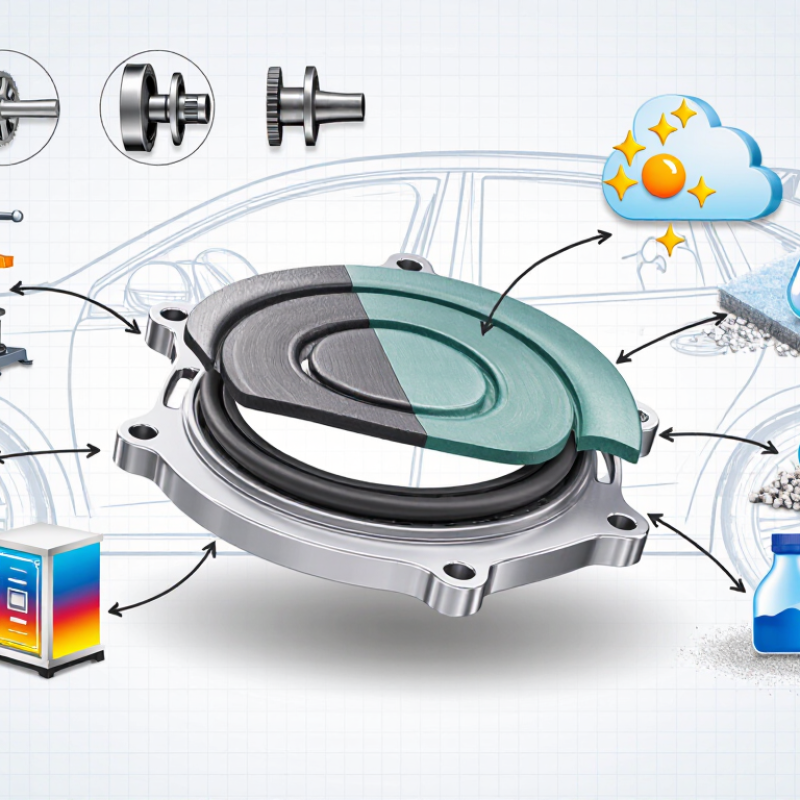
Vehicle seals form a quiet barrier between the cabin and the elements. Door weatherstrips compress against the body to limit wind, rain, dust, and road noise. Window channel seals guide glass as it moves and help reduce rattling. Trunk seals protect luggage from water and grit, while engine and transmission seals retain lubricants around moving parts. Small gaps matter. A door seal that looks intact may still leak if it has lost elasticity or no longer sits evenly.
In China, vehicle seals are commonly made from rubber compounds such as EPDM, with silicone used where wider temperature tolerance is needed. Material choice affects flexibility, aging, and resistance to heat, moisture, and ozone. Design matters too: compression shape, joining quality, and accurate fit all influence sealing performance. During inspection, check for flattened sections, cracks, loose corners, and water marks after rain. A simple paper-strip test can reveal uneven door pressure, though it cannot replace a proper leak check. It is easy to blame the material alone; installation and body alignment can be just as important. Even a well-made seal needs periodic inspection.
High-performance vehicle seals depend on choosing a material that suits the fluid, temperature, and movement around it. EPDM is commonly selected for doors and windows because it resists weathering and ozone. It can stay flexible through repeated opening and closing, though the seal’s profile and compression also affect how well it keeps out water.
Nitrile rubber suits many oil-exposed applications, but ozone can shorten its service life. Silicone handles a broad temperature range and remains pliable, yet it may wear faster where grit rubs against it. Fluoroelastomers can tolerate demanding heat and chemical exposure, but their cost and properties may be unnecessary for a simple cabin seal.
Small details matter. A material chart alone can mislead.
Engineers should check compression set, hardness, tear resistance, and compatibility with nearby fluids. Testing the finished seal matters too: a sample may perform well in a lab but behave differently when squeezed into a tight channel. Dust, surface finish, and installation pressure all play a part. Not always. The best choice is usually a balanced compound, not simply the one with the most impressive specification.
A vehicle seal must stay flexible while resisting pressure, vibration, water, dust, and temperature changes. Material choice matters. Rubber compounds differ in their tolerance for heat, oils, cleaners, and repeated compression. A material suited for an engine-area application may not be ideal for a door or window seal. Check the expected environment, not just the part’s shape.
Design and installation are equally important. The seal’s cross-section, contact pressure, and fit determine whether it closes gaps without being crushed. Too little compression can allow leaks; too much may speed up deformation. Clean mating surfaces help. A folded lip, trapped grit, or uneven fastener pressure can create a leak path, even when the seal itself is sound. Small details matter.
Operating conditions affect service life over time. Heat cycling can harden some materials, while sunlight and ozone may contribute to cracking in exposed areas. Regular inspection can reveal flattening, cuts, swelling, or loss of elasticity. Still, appearance alone is not a complete test; a seal may look acceptable and perform poorly under pressure. Testing under realistic temperature and fluid conditions gives more useful evidence, though it may not reproduce every driving situation. That limitation deserves attention.
Manufacturing and Quality Standards for Vehicle Seals
Reliable vehicle seals start with controlled materials and repeatable production. Rubber compounds should be checked for hardness, tensile strength, compression set, and resistance to heat, oil, and ozone. ASTM D395 and D412 provide established methods for measuring compression set and tensile properties. These results matter: a seal compressed around a metal flange must recover after heat and vibration, not merely look smooth on the inspection bench. Dimensions, mould conditions, and batch records also need regular checks. Small process changes can create large fit problems.
ISO’s 2023 Survey recorded more than one million valid ISO 9001 certificates worldwide. This is useful context for quality management, but certification alone does not prove that a particular seal will perform well. Buyers should request product-specific test results, acceptance limits, and traceability records. One point is easy to overlook: a passing sample may not represent every production batch. I would want to see how often checks are repeated.
Tips: Ask for test conditions, not just pass/fail results. Compare samples after heat aging and compression, and inspect the sealing lip for tears or uneven moulding. A few extra checks can prevent leaks.
Manufacturing and quality standards assess how elastomer seals withstand heat, compression, fluids, and aging.
Example laboratory temperature setpoints (°C) for material conditioning and heat-aging evaluations. The values are illustrative test points, not universal acceptance limits; appropriate conditions depend on the elastomer, test method, and vehicle specification. Relevant methods include ISO 188 for heat aging and ISO 815-1 for compression set.
Vehicle seal performance depends on more than the rubber compound. Temperature swings, dust, vibration, and repeated door or engine movement all play a part. In service checks, inspect for flattened lips, fine cracks, hardening, and uneven contact marks. A simple paper-strip test can reveal weak door compression: close the door over a strip, then pull gently. If it slides out easily, the seal may not be pressing evenly. This test is useful, but it cannot identify every leak.
Tips: Clean seals with mild soap and water. Dry them fully. Avoid sharp tools and harsh solvents, which can damage the surface. Check drain paths too; trapped water can make a sound seal seem faulty.
For deeper testing, technicians can measure dimensions and compression recovery, or use controlled air or water checks to locate leaks. Record the vehicle’s mileage, exposure, and inspection results. Replace a seal when it no longer recovers its shape or maintains contact, rather than relying on appearance alone. Service life varies with material, installation, and use, so a fixed replacement interval may mislead. A clean bench test can still miss a problem caused by a warped frame or poor fit. That detail is easy to overlook.
The table below summarizes common vehicle-seal applications, performance influences, relevant test methods, and practical maintenance considerations. Service-life figures are indicative planning ranges, not guarantees; actual life depends on design, material, installation, operating conditions, and maintenance.
| Seal application | Main performance factors | Relevant evaluation methods | Maintenance guidance | Indicative service-life planning range |
|---|---|---|---|---|
| Door and window weatherstrips | Compression set, temperature cycling, ozone and UV exposure, water drainage, and correct contact pressure. | Compression-set testing; ozone exposure; heat and cold aging; water-leak checks on the assembled vehicle. | Clean with mild soap and water; keep drainage channels clear; inspect for cracks, hardening, flattening, or loss of contact. | About 5–10 years in moderate use; harsh sun, cold, or frequent door operation may shorten life. |
| Engine and transmission oil seals | Fluid compatibility, shaft speed and surface finish, temperature, pressure, alignment, and contamination. | Fluid-immersion testing; heat aging; dimensional checks; leakage and endurance testing on a representative shaft assembly. | Check for fresh oil traces during routine servicing; investigate shaft wear, excessive runout, or a blocked breather when leakage appears. | Often designed to last for many years, but replacement timing is condition- and application-dependent; there is no universal interval. |
| Coolant-system O-rings and gaskets | Coolant formulation, sustained heat, pressure cycling, material compatibility, and installation damage. | Coolant immersion and volume-change checks; heat aging; pressure and thermal-cycle leak tests. | Use the specified coolant; inspect for seepage, swelling, flattening, or brittle surfaces when the system is serviced; replace disturbed seals where required. | Can approach the service interval of the surrounding component under suitable conditions; heat and incorrect coolant can reduce life substantially. |
| Door, trunk, and hatch perimeter seals | Seal-profile design, compression uniformity, adhesion or retention, repeated closing, and exposure to dirt and weather. | Compression-force measurement; dimensional inspection; water-spray and wind-noise checks on the installed closure. | Remove grit, check clips and adhesive, and inspect for gaps or permanent deformation; avoid petroleum-based cleaners unless approved for the material. | Approximately 5–10 years is a broad planning estimate; frequent use and poor fit can cause earlier leakage or noise. |
| Brake-system seals | Brake-fluid compatibility, temperature, pressure, cleanliness, and compliance with the specified material and system design. | Brake-fluid compatibility and aging tests; pressure/leak testing; dimensional and material verification against applicable requirements. | Follow the vehicle maker’s inspection and fluid-service schedule; use only the specified fluid; replace seals showing leakage or damage with qualified parts. | No general replacement life applies to every design; inspect and service according to the vehicle’s schedule and system condition. |
| Dust boots and suspension-joint boots | Flex fatigue, abrasion, stone impact, ozone, grease compatibility, and clamp or fastener retention. | Flex and fatigue cycling; ozone and aging exposure; visual inspection and contamination checks after durability testing. | Inspect during underbody checks for splits, loose clamps, grease loss, or dirt ingress; replace a damaged boot promptly to protect the joint. | Highly dependent on road conditions and exposure; inspect at routine services rather than relying on a fixed age-based interval. |
Test references describe common laboratory approaches, including compression-set, tensile, ozone, fluid-immersion, and aging tests. Test conditions and acceptance limits should be selected for the seal material, vehicle application, and applicable specifications; laboratory results alone do not establish real-world service life.
Check hardness, tensile strength, compression set, and resistance to heat, oil, and ozone. A smooth surface alone proves little.
Quality certification does not confirm that every seal performs well. Ask for test conditions, acceptance limits, and batch traceability records.
Small changes in dimensions or mould conditions can affect fit. A seal may also fail against a warped frame.
Close the door over a paper strip and pull gently. If it slides out easily, compression may be weak. Not a complete leak test.
Look for flattened lips, fine cracks, hardening, or uneven contact marks. A seal can look fine but fail to recover its shape.
Use mild soap and water, then dry them fully. Avoid sharp tools and harsh solvents; they can damage the rubber.
Yes. Trapped water may appear to indicate a leak. Check the drain paths as well as the seal.
Replace it when it no longer regains its shape or maintains contact. Service life varies with material, installation, and use.
Record mileage, exposure, and inspection results. Repeat checks matter, since one passing sample may not represent every batch.
Vehicle seals play an important role in protecting vehicle systems from dust, water, air leaks, vibration, and fluid loss. Different seal types are designed for locations such as doors, windows, engines, and fluid connections, so their shapes and functions vary. High-performance seals may use rubber, silicone, or other engineered materials selected for flexibility, heat resistance, durability, and compatibility with the surrounding components.
What factors affect the performance of vehicle seals? Key considerations include material quality, seal design, installation accuracy, temperature changes, pressure, friction, and exposure to moisture or chemicals. Consistent manufacturing processes and quality checks help ensure that seals meet dimensional and performance requirements. Regular inspection and proper maintenance can identify wear, hardening, cracks, or deformation before they lead to leaks or reduced protection. With suitable materials, careful production, and timely replacement, vehicle seals can provide reliable service throughout their intended lifespan.

Haala Parts