Choosing the right sealing strip is not a cosmetic decision. It affects cabin noise, water resistance, temperature control, and long-term driving comfort. A compact car, delivery van, electric vehicle, and off-road SUV face very different sealing demands.
So, how should buyers approach How to choose sealing strips for different vehicle types? Automotive sealing engineer Daniel Mercer offers a practical warning: “A sealing strip must match the vehicle’s movement, pressure points, climate, and installation space.” His view reflects workshop experience, where a strip that looks correct can still leak after repeated door movement.
Small cars often need flexible EPDM profiles around narrow doors and windows. Vans require stronger compression recovery because their doors open frequently. Electric vehicles may need excellent acoustic performance, especially around frameless glass and battery compartments. SUVs and off-road vehicles usually need thicker profiles that tolerate dust, vibration, mud, and uneven body movement.
Material matters, too. EPDM handles weather exposure well, while silicone performs better across wider temperature ranges. Flocked channels can guide glass smoothly and reduce friction. Adhesive-backed strips save time, but poor surface cleaning can cause early failure.
Details matter.
Measure the original profile carefully. Check its hardness, shape, length, and compression. A strip that is too thick may prevent a door from closing. One that is too soft may lose contact during rain.
Even experienced installers make mistakes. I once underestimated a vehicle’s door alignment and selected a suitable material with the wrong profile depth. The result was extra pressure, uneven wear, and unnecessary rework. Fitment deserves the same attention as material quality.
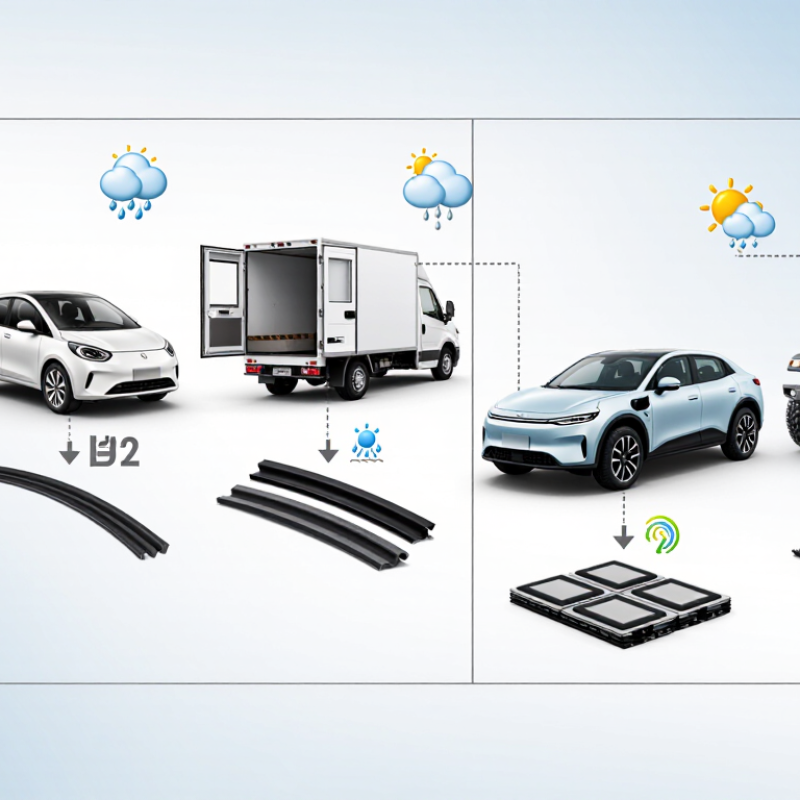
Vehicle sealing strips are flexible profiles fitted around doors, windows, trunks, hoods, and sliding panels. They close small gaps between moving or fixed body parts. When a door shuts, the strip compresses against the frame. This pressure blocks rain, dust, wind noise, and exhaust fumes from entering the cabin.
Most strips use EPDM rubber because it handles sunlight, temperature changes, and moisture well. However, the correct profile depends on the vehicle’s structure. A passenger car may need a soft door seal for quiet closing, while a van requires stronger compression around a large sliding door. Trucks and utility vehicles often need thicker seals that tolerate frequent loading and vibration. The shape matters too. A channel-mounted strip, adhesive seal, and push-on profile cannot always replace one another.
In practical fitting work, I check the original channel, corner radius, compression depth, and door alignment before choosing a replacement. A seal that is too thick can prevent proper locking. One that is too soft may flatten quickly. I once focused too much on rubber thickness and overlooked the corner shape. The result was a small leak after heavy rain. That mistake was useful.
Measure twice. Test with water and paper. A good strip should sit evenly, close without force, and remain flexible after repeated opening.
Surface preparation also matters; grease or loose paint can weaken adhesion and shorten service life.
Why Choose the Right Sealing Strips for Every Vehicle Type?
Vehicle design directly shapes sealing strip requirements. A sedan usually needs flexible seals around doors, windows, and the trunk. Its lower body height demands precise compression against water and road dust. SUVs have larger doors, higher openings, and wider tailgates. Their seals must manage greater movement and uneven closing pressure. Hatchbacks need especially durable tailgate seals because the rear opening is used frequently.
Electric vehicles create different priorities. Their quieter cabins make wind noise easier to notice. Their heavier doors can also increase compression and friction at each closing cycle. The U.S. Department of Energy reports that a 10% vehicle weight reduction may improve fuel economy by 6–8%. Lightweight sealing materials can support that goal, although the saving is not automatic. Commercial vans face harsher conditions. Frequent loading, vibration, and sliding doors require strong abrasion resistance. ACEA’s Vehicles on European Roads 2024 report counted roughly 249 million passenger cars across the European Union, showing how widely these requirements vary.
Tips: Match the strip to the opening first. Check compression, temperature range, UV resistance, and installation tolerance. ISO 16750 environmental testing can guide durability checks. Do not rely only on a soft feel. A seal may look excellent but fail after repeated closing cycles. I have seen fitment assumptions cause noise leaks; measurement should come before replacement.
| Vehicle Type | Typical Sealing Locations | Typical Closure Gap | Recommended Compression | Common Material Selection | Typical Hardness | Typical Service Temperature | Primary Design Requirement |
|---|---|---|---|---|---|---|---|
| Passenger Car | Door apertures, glass run channels, trunk lid, hood, and body joints | 3–6 mm | 25–40% | EPDM sponge, EPDM solid rubber, or TPV | 55–75 Shore A | −40°C to +120°C | Low wind noise, reliable water exclusion, low closing effort, and good dimensional recovery |
| SUV and Crossover | Large doors, liftgate, panoramic roof, wheel-arch areas, hood, and underbody openings | 4–8 mm | 25–40% | EPDM sponge with reinforced carrier, EPDM solid rubber, or TPV | 60–80 Shore A | −40°C to +125°C | Higher tolerance absorption, strong resistance to dust and mud, and stable sealing on larger openings |
| Pickup Truck | Cab doors, rear window, hood, tailgate, bed joints, and fuel-filler access areas | 4–9 mm | 30–45% | High-density EPDM, EPDM sponge, or abrasion-resistant TPV | 65–85 Shore A | −40°C to +125°C | Resistance to vibration, dust, water splash, abrasion, and repeated tailgate operation |
| Passenger Van and Minibus | Sliding doors, rear doors, roof joints, windows, floor interfaces, and service compartments | 5–10 mm | 30–45% | EPDM sponge, reinforced EPDM, or silicone for high-temperature zones | 55–80 Shore A | −40°C to +130°C | Accommodation of large gaps, frequent sliding-door movement, passenger comfort, and water protection |
| Electric Vehicle | Doors, hood, liftgate, battery enclosure, charging port, high-voltage cable entries, and thermal-system compartments | 2–7 mm | 20–35% | Low-compression EPDM, silicone, or electrically compatible elastomer | 45–75 Shore A | −50°C to +150°C | Low compression force, reduced cabin noise, electrical isolation where required, and resistance to coolant or battery-enclosure conditions |
| Light Commercial Vehicle | Cargo doors, rear doors, cab doors, roof seams, bulkhead, hood, and loading-area interfaces | 5–10 mm | 30–45% | Heavy-duty EPDM sponge, reinforced EPDM, or TPV | 60–85 Shore A | −40°C to +125°C | Frequent door cycling, high weather exposure, impact resistance, and long-term compression recovery |
| Heavy Truck | Cab doors, windshield, sleeper compartment, engine hood, service panels, and chassis-mounted enclosures | 6–12 mm | 30–50% | High-density EPDM, reinforced EPDM, or silicone near engine heat zones | 65–90 Shore A | −45°C to +150°C | High vibration resistance, large-gap sealing, thermal durability, and resistance to oil mist and road contaminants |
| Transit Bus | Passenger doors, emergency exits, windows, roof panels, engine compartment, and floor-to-body joints | 6–14 mm | 30–50% | EPDM sponge, reinforced EPDM, or silicone in high-heat areas | 55–85 Shore A | −40°C to +150°C | Large-gap compensation, repeated door cycling, passenger safety, noise reduction, and fire-performance compliance where specified |
Note: Values shown are typical engineering ranges for vehicle sealing applications. Final selection should be verified against the vehicle design drawing, closure force target, environmental exposure, material compatibility, and applicable test standards.
Material selection should follow the vehicle’s environment, not just its shape. Passenger cars often need EPDM rubber around doors and trunks because it resists ozone, rain, and temperature changes. Electric vehicles require careful compression control. Excessive pressure can increase door-closing effort and reduce usable range through repeated cabin conditioning. The U.S. Department of Energy reports that cold weather can reduce city fuel economy by 10–20%. A well-fitted seal cannot eliminate this loss, but it can reduce drafts and thermal leakage. Small details matter.
Commercial vans face frequent loading, twisting, and door impacts. A denser EPDM profile, reinforced with fabric or a stronger carrier, may last longer. Off-road vehicles need flexible seals that tolerate dust, mud, and body movement. Silicone performs well across wide temperature ranges, but its higher cost needs justification. ASTM D2000 classifications help compare rubber performance, while ISO 815-1 compression-set testing indicates how well a seal recovers after long-term pressure. Testing still beats assumptions.
Convertible roofs and sliding doors need softer, guided profiles. They must seal without dragging across painted surfaces. From practical fitting work, uneven gaps usually cause more noise than weak material. This is easy to overlook. Designers should measure flange width, compression, corner radius, and drainage paths before choosing a profile. A perfect material can fail when the design ignores real vehicle movement.
Choosing the right sealing strip starts with the application, not only the vehicle model. Door seals need flexible profiles that tolerate repeated opening, vibration, and rain. Trunk seals require strong compression recovery around uneven corners. Window channels must guide glass smoothly without creating drag or squeaking. Engine-bay applications demand materials that resist heat, oil mist, and temperature changes.
For most exterior doors, EPDM is a practical choice because it handles sunlight, ozone, and moisture well. Silicone suits higher-temperature areas, but it may cost more and need careful bonding. PVC profiles can work for interior trim, though they may become less flexible in severe cold. Measure the channel width, contact gap, and compression depth before ordering. A strip that looks correct may still close the door poorly. I have seen this happen during routine workshop fitting.
Tips: Clean the mounting surface thoroughly. Test a short section first. Check that the seal compresses evenly without stretching around corners. Leave no sharp folds. If the vehicle operates near dust, salt, or heavy rain, inspect the seal regularly. Small gaps can create wind noise and water marks. The best selection also depends on installation skill, not just material specifications. Some choices seem obvious, yet real-world fitting can reveal problems that a product sheet misses.
Selecting a sealing strip requires matching the material to temperature, fluids, weather exposure, compression, and the vehicle application.
| Vehicle application | Common material choice | Primary selection reason |
|---|---|---|
| Passenger-car doors and windows | EPDM | Strong resistance to weathering, ozone, water, and ultraviolet exposure |
| Commercial-vehicle doors | EPDM | Durable under repeated compression and outdoor operating conditions |
| EV battery and electrical enclosures | Silicone | Wide temperature capability and stable flexibility over extended service periods |
| Engine-compartment fluid-exposed areas | NBR | Better resistance to oils and fuels than general-purpose weather seals |
| Interior trim and low-temperature glazing channels | PVC | Cost-effective profile forming and suitable performance in moderate environments |
The chart shows representative continuous service-temperature ranges commonly associated with these elastomer families. Actual limits depend on formulation, profile design, compression, exposure time, and installation conditions.
The right sealing strip must match the vehicle’s door shape, material, and exposure level. A strip for a compact car may not suit a van with wider gaps. Before installation, inspect the channel for rust, dust, old adhesive, and sharp edges. Clean it with a mild automotive cleaner, then let it dry completely. Moisture causes early failure.
Measure the full opening before cutting. Leave a small allowance, but avoid stretching the strip around corners. Tension can pull it loose later. Press the seal evenly with a soft roller or clean cloth. Do not hammer it into place. At tight bends, warm the material gently with a hair dryer. Excessive heat can deform the profile. Allow the adhesive to set before closing the door repeatedly.
Maintenance is simple but often neglected. Check for flattened sections, cracks, loose corners, and water marks every few months. Wipe the strip with clean water and a soft cloth. Harsh solvents may harden the rubber. A suitable rubber conditioner can reduce surface drying, but too much product attracts dust. Test a small area first. I have seen correctly fitted seals fail because owners ignored trapped grit. I have also rushed a repair and missed a small gap near the hinge. That mistake was easy to prevent. Inspect after heavy rain, car washing, and extreme temperature changes. Different vehicle bodies move differently, so a quiet door is not always proof of a perfect seal.
Sedans usually need flexible seals around doors, windows, and trunks. Their lower body requires accurate compression against water and road dust. SUVs have larger doors and wider tailgates. Their seals must handle movement and uneven closing pressure.
Hatchback tailgates open frequently during daily use. Repeated movement can flatten or loosen a weak seal. Choose a profile that tolerates regular bending and firm closing. Check the upper corners carefully.
Electric vehicles often have quieter cabins, so wind noise becomes easier to notice. Heavier doors can increase compression and friction during closing. Lightweight materials may support efficiency, but savings are not automatic. A quiet cabin does not prove perfect sealing.
Match the strip to the opening shape and vehicle type. Check compression, temperature range, UV resistance, and installation tolerance. A soft strip is not always the better choice. Repeated closing tests reveal more than touch alone.
Remove rust, dust, old adhesive, and sharp edges from the channel. Clean the surface with a mild automotive cleaner. Let it dry completely before fitting the strip. Moisture causes early failure.
Measure the full opening before cutting. Leave a small allowance, but do not stretch the strip around corners. Press it evenly with a soft roller or clean cloth. Do not hammer it into place. Measure twice.
Warm the material gently with a hair dryer at difficult bends. Too much heat can deform the profile. Allow adhesive sections to set before repeatedly closing the door. Rushing this step can create a hidden gap.
Inspect them every few months and after heavy rain or car washing. Look for cracks, flattened areas, loose corners, and water marks. Wipe the strip with clean water and a soft cloth. Avoid harsh solvents because they may harden the rubber. Small gaps matter.
Vehicle sealing strips are flexible components designed to close gaps around doors, windows, trunks, hoods, and other openings. They help prevent water, dust, noise, vibration, and air leakage while improving comfort, insulation, and component protection. Because cars, trucks, buses, electric vehicles, and specialty vehicles differ in structure, usage conditions, and exposure levels, each type requires sealing strips with suitable profiles, compression characteristics, flexibility, and resistance to temperature, chemicals, and weather.
How to choose sealing strips for different vehicle types depends on the installation location, gap size, movement frequency, operating environment, and required durability. Rubber, thermoplastic, silicone, and composite materials may serve different purposes, while adhesive-backed, push-fit, or channel-mounted designs offer different installation advantages. Accurate measurements, clean surfaces, correct alignment, and controlled compression are essential for reliable sealing. Regular inspection, cleaning, and timely replacement can prevent hardening, cracking, deformation, and leakage, ensuring long-term performance and maintaining vehicle safety and comfort.

Haala Parts